
Every 7th of July, World Bioproduct Day celebrates the growing role of bio-based innovation in creating more sustainable products and production systems. Across Europe, researchers, industry partners and primary producers are working together to transform renewable biological resources into products that can reduce reliance on fossil-based materials, while creating new opportunities for rural communities.
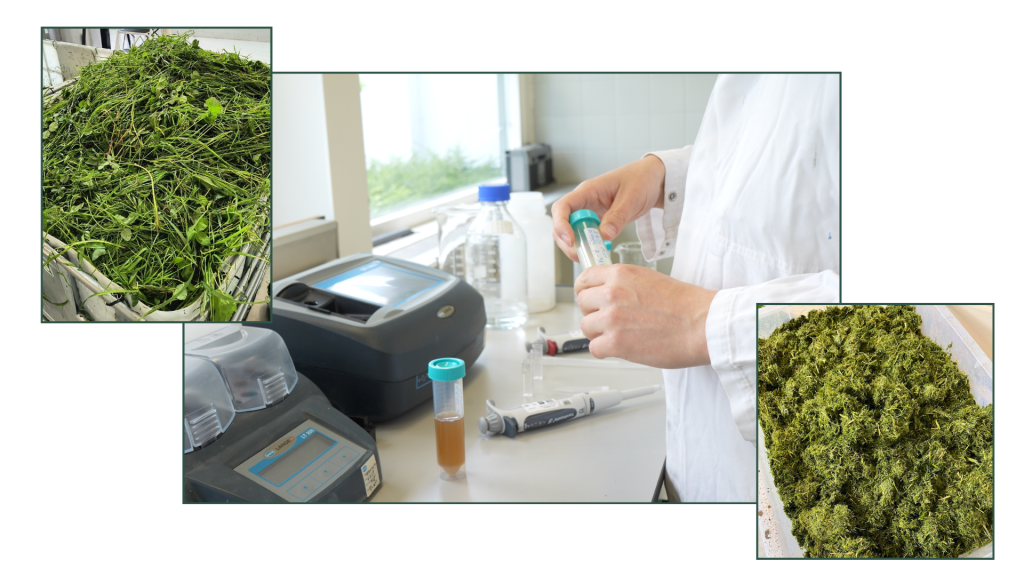
At Rural BioReFarmeries, that vision comes to life through a green biorefinery model where every fraction of grass biomass has the potential to become a valuable resource. From food ingredients and animal feed to packaging materials, biogas and bio-based chemicals, the project demonstrates how one feedstock can support multiple value chains while contributing to a more circular economy.
To mark this World Bioproduct Day, we looked back at our In conversation with interview series and asked: What do our partners see as the future of sustainable bioproducts?
Making the most of every resource
For Rural BioReFarmeries partners, the future of bio-based products starts with moving away from linear systems where resources are used once and discarded. This ambition comes to life in the green biorefinery models we are building within the project, where we aim to extract maximum value from grass by transforming different fractions into a variety of high-value products.
“The key idea behind Rural BioReFarmeries is to move away from the idea of producing a single product from biomass. Instead, we want to demonstrate how small-scale green biorefineries can create multiple value streams from locally available resources, while supporting farmers and rural communities,” explains James Gaffey, RBRF Project Coordinator.
Professor Vincent O’Flaherty from University of Galway also highlights the importance of this circular approach: “It’s all about maximising value and ensuring the green biorefinery system is as circular as possible.”
Through fermentation technologies, his team is exploring how residual streams from grass processing can be converted into valuable platform chemicals and biogas, ensuring that even remaining fractions continue to generate value.
Similarly, Professor Piotr Oleskowicz-Popiel from Poznań University of Technology sees opportunities in transforming materials that would otherwise be considered waste: “It means taking something of little or no value — for example, brown juice, a liquid byproduct from biorefined grass — and using microbes to transform it into something valuable. In short: we turn ‘leftovers’ into resources.”
Creating products with real-world applications
Developing sustainable products is about discovering new possibilities as much as ensuring those products can perform in real-life applications.
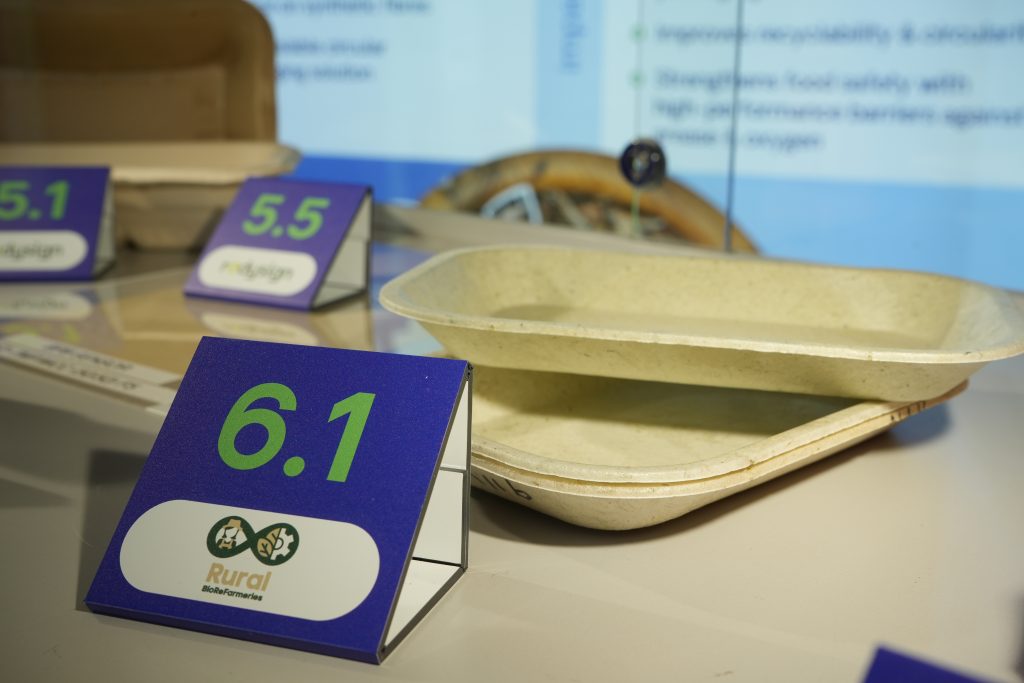
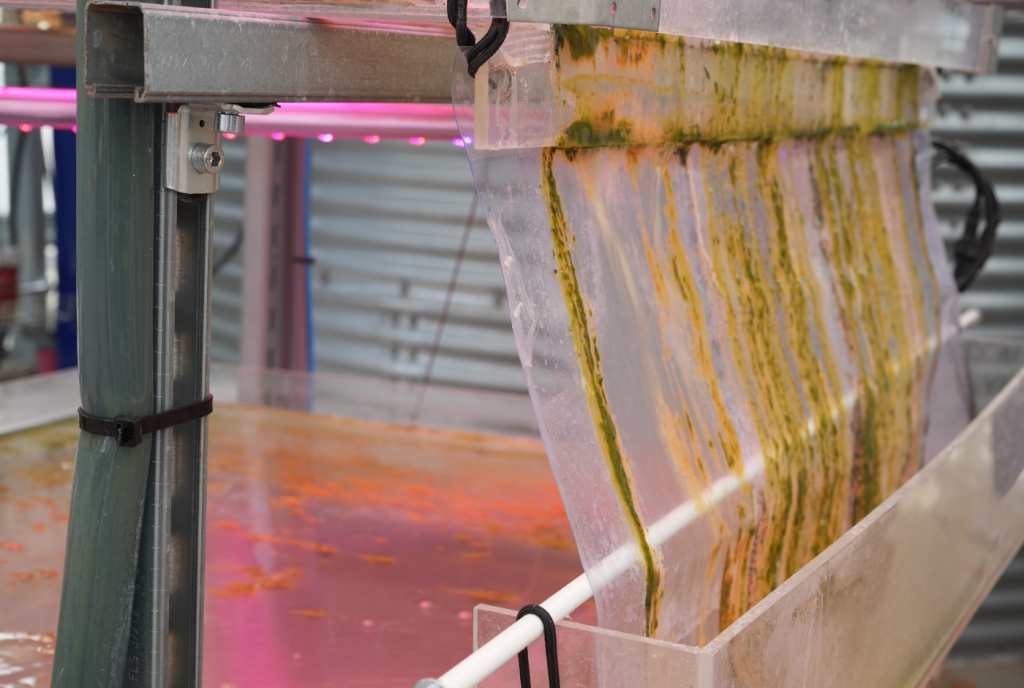
At Wageningen University & Research, Rommie van der Weide and Matthew Booth are exploring how different grass fractions can be refined and characterised to develop new applications within the biorefinery value chain: utilising fibers to develop bio-based packaging products with PaperFoam, and testing the use of digestate to grow microalgae with AlgaNed.
“The interesting thing about grass is that it contains many different valuable components. The challenge is understanding how we can separate and process these fractions in a way that allows each of them to reach their highest value,” Rommie explains.
At Carbery, Innovation Manager Aliabbas Saleh is exploring how proteins extracted from grass could become valuable food ingredients. “We’ve been sitting on a gold mine,” he says, referring to the potential of grass-based proteins.
However, he emphasises that scientific potential alone is not enough. New ingredients need to meet the expectations of both industry and consumers: “It’s not enough to say a protein source is good — we also need to explore how it can be used. The idea is to balance taste, nutrition and functionality so well that people enjoy the product without even noticing it contains protein.”
Going beyond “bio-based”
While bio-based products offer exciting opportunities, partners across Rural BioReFarmeries highlight that sustainability requires more than simply replacing fossil-based materials.
Gülşah Yılan from Unitelma Sapienza explains: “We cannot automatically assume that a bio-based product is always more sustainable. Sustainability is much more complex than simply asking whether something is bio-based or not.”
Through a mix of sustainability and life cycle assessments, the project is evaluating environmental, economic and social impacts to understand how green biorefinery models perform as complete systems.
For Cian White from ODOS, data will be key to demonstrating whether these approaches can deliver measurable benefits: “If technologies like green biorefineries can significantly reduce emissions while still producing economically viable products, that could be very key for the future of the sector.”
From an industry perspective, Joep Smits from PaperFoam believes it’s also important to show people that choosing a more sustainable option doesn’t necessarily mean compromising on quality or functionality. In fact, he points out that the work behind Rural BioReFarmeries is contributing towards a powerful narrative: “Being able to tell consumers that a package has been made using locally sourced grass fibres would demonstrate that circularity isn’t just a concept — it can become a reality.”
Ensuring innovation works for farmers and rural communities
Another running concept shared by experts involved in RBRF is that the transition towards a bio-based economy will only succeed if new solutions create value for the people who produce the resources.
For Cathal O’Donovan from Carhue Piggeries, this means ensuring that innovations respond to farmers’ practical realities: “Farmers have a business to run.” He believes that demonstrating clear benefits will be essential for encouraging adoption of new approaches.
Professor Vladislav Popov from the Agricultural University of Plovdiv also highlights the importance of developing models that support rural communities: “Ultimately, this project is not just about technologies or processes — it’s about supporting rural communities.”
By involving farmers through demonstration activities, ambassador programmes and knowledge exchange, Rural BioReFarmeries aims to create solutions that are not only technically possible, but also economically and socially viable.
A shared vision for the future of bioproducts
Across their different areas of expertise, Rural BioReFarmeries partners share a common vision: the future of sustainable products will depend on using resources more efficiently, creating circular systems and ensuring that innovation benefits the entire value chain.
From grass-based proteins and packaging materials to fermentation products and renewable energy, green biorefineries demonstrate how a single resource can support multiple applications, as James reflects:
“The future of bio-based products is not just about replacing fossil-based materials with renewable alternatives. It’s about creating new, circular systems where resources are used more efficiently, farmers are active participants, and value is created across rural communities. Rural BioReFarmeries is about demonstrating that this kind of transition is possible — turning locally available biomass into a range of valuable products while supporting a more sustainable agricultural future.”