
Vladislav Popov is a Professor at the Department of Agroecology at Agricultural University of Plovdiv in Bulgaria, where he also coordinates the National Research Programme on Smart Crop Production. With more than three decades of experience across agronomy, plant protection, organic farming and agroecology, Vladislav brings a unique perspective into the Rural BioReFarmeries project.
In this interview, he reflects on his academic journey of over 25 years, the evolution of the bioeconomy in Europe, and his role in helping shape new business models that can support farmers across Central and Eastern Europe.
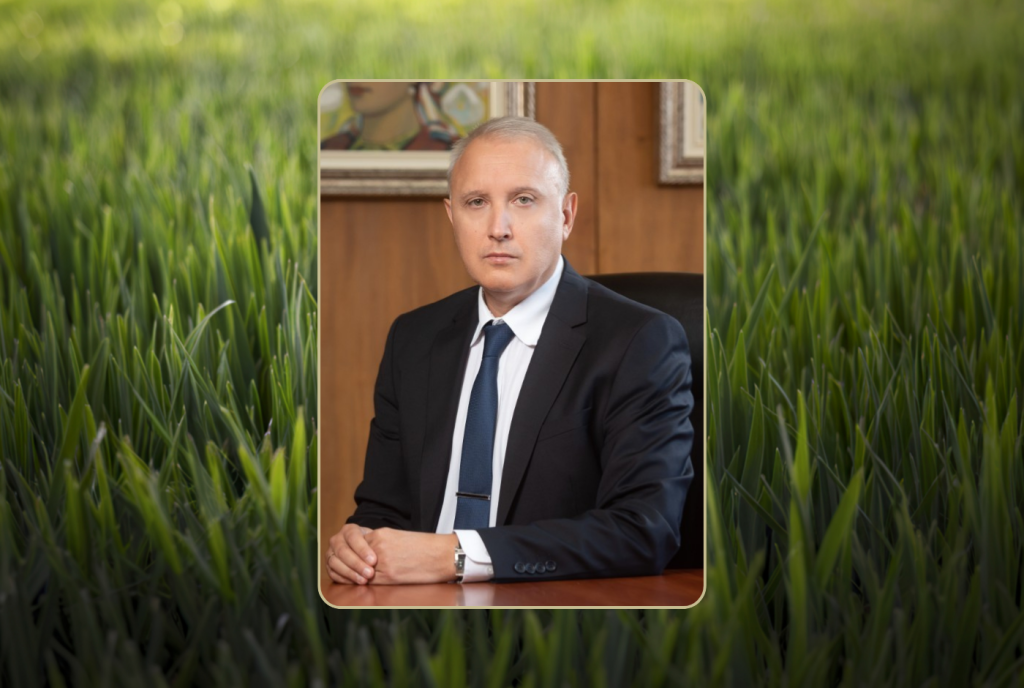
Hi Vladislav! Could you walk us through how you initially entered the fields of agronomy, plant protection and eventually agroecology?
The full story goes back quite far — I began my studies in 1987 in Moscow, focusing primarily on plant and crop protection, and later continued my agronomic training at the Agricultural University of Plovdiv.
My shift toward agroecology began in the early 1990s. As part of the TEMPUS mobility scheme in Europe, I completed my master’s degree in ecological and organic agriculture at Wageningen University & Research in The Netherlands, and this exposure opened the door to a more systems-oriented understanding of agriculture, contrasting sharply with the highly intensive, pesticide-focused approaches I originally studied.
Later, I pursued a PhD at the University of Western Sydney, where I researched buffer and filter strips as mitigation tools for pesticide runoff — a topic that later became highly relevant within the EU’s Common Agricultural Policy.
When I returned to Plovdiv, I was part of the team who helped establish Bulgaria’s first Agroecological Centre. This marked the beginning of our long-term engagement with organic agriculture and agroecological systems, and it set the foundation for the work I’ve been doing ever since.
You’ve been involved in European-level discussions on bioeconomy and food systems for many years. Why do you think the concept of the bioeconomy has become so prominent in recent policy agendas?
The bioeconomy has been growing steadily for more than a decade. Germany launched the first major national strategy in 2012, driven by the need to move away from fossil-based resources. The European Commission quickly recognised that if we want to reduce dependency on fossil inputs, we need strong biobased systems — and agriculture is fundamental to that.
Recent events, including the war in Ukraine, only reinforced how vulnerable Europe is when it comes to energy and raw material imports. At the same time, many farmers across Europe still rely on exporting raw, low-value products, which makes them very economically vulnerable.
The bioeconomy offers a way to diversify income streams for farmers, to keep more value locally, and to create more resilient rural areas. That’s why the concept has become so central in European policy.
You’re now involved in the Rural BioReFarmeries project. What motivated you to join this EU-wide consortium?
We had previously worked with James Gaffey and other RBRF colleagues through the COOPID project, which showed us something very clearly: many promising innovations in the bioeconomy struggle to reach farmers in Central and Eastern Europe. And yet, these regions are among the ones that need diversification the most.
Ireland and Denmark already have strong examples of biorefinery models. In Bulgaria, Poland or Greece, many farmers are still cautious, mainly because of limited support, limited exposure to new models, and economic risk. The Rural BioReFarmeries model — decentralised, cooperative and based on real-world examples — offers a practical way to bridge this gap.
This project stood out for me because it brings together real-world examples and decentralised solutions, and it’s also centered around direct engagement with farmers through ambassador programmes, on-site demonstrations and co-creation workshops. This is essential, because farmers are far more likely to adopt a model once they have seen it work in comparable contexts.
Your team in Plovdiv plays a central role in shaping the business models we’re proposing for small-scale green biorefarmeries. How are you planning to tackle this?
As a partner involved in Work Package 7, our main task is to design decentralised business models that reflect farmers’ real conditions — not theoretical scenarios. To do this, we are integrating economic data, technological assessments and social insights, while also involving farmers from the very beginning.
In Eastern Europe, many farmers are reluctant to take financial risks or invest in processing facilities. Some hesitate to cooperate due to historical reasons. So the models we develop need to show concrete benefits: profitability, feasibility, environmental improvements, social value and long-term resilience.
We’re also working closely with the “ambassador farmers” who will test and communicate these models locally. Their involvement is essential if we want the concept to spread beyond the pilot regions.
What is the key outcome you personally hope this project will deliver?
For me, the primary aspiration is to establish a functioning replication network in Central and Eastern Europe. If farmers in Bulgaria, Poland, Greece and Italy can see that biorefinery models from Ireland and Denmark are technically and economically viable, they will consider adopting them.
Ultimately, this project is not just about technologies or processes — it’s about supporting rural communities. In many EU countries, farmers are the backbone of rural life. If they disappear, entire rural regions risk depopulation. The Rural BioReFarmeries model has the potential to improve economic resilience while contributing to Europe’s broader circular bioeconomy ambitions. That would be the success I hope we can achieve.
Stay up-to date with the Rural BioReFarmeries journey!
- Follow us on LinkedIn, X and BlueSky
- Watch our latest videos on YouTube
- Subscribe to the RBRF newsletter