
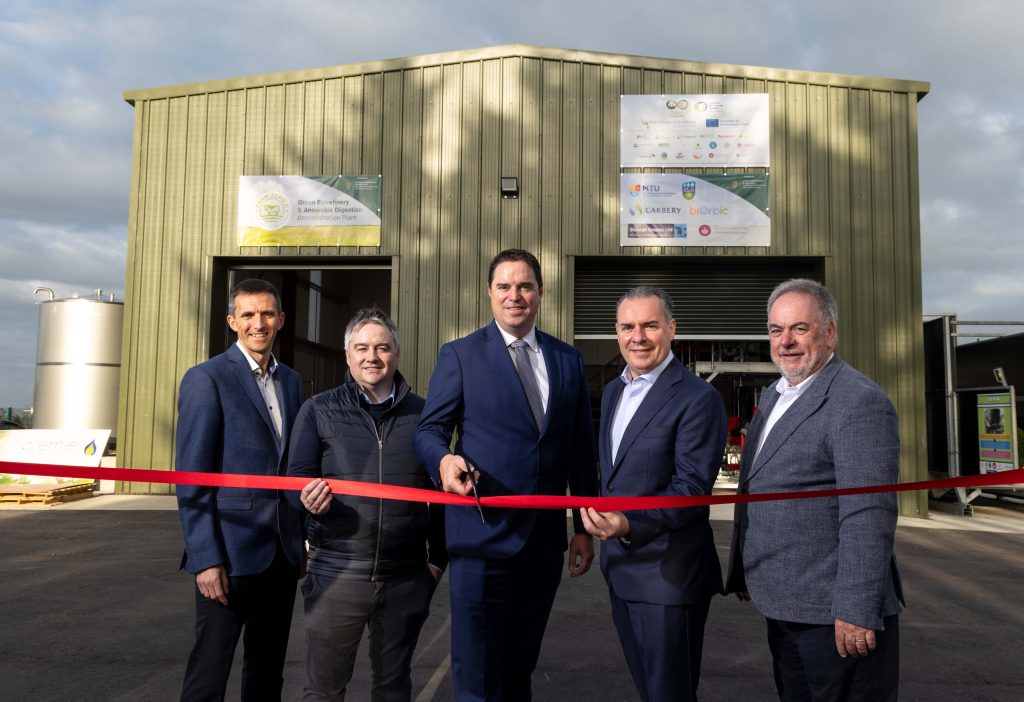
On 1st September 2026, Rural BioReFarmeries celebrated a huge milestone for the project – the opening of the Irish demonstration-scale green biorefinery, the first one in the country and one of the world’s largest facilities of its kind.
Minister Martin Heydon from the Department of Agriculture, Food and the Marine officially inaugurated the €3 million facility located at Shinagh Estates in West Cork, which is part of the Farm Zero C initiative. Virginia Puzzolo, Head of Programme at Circular Bio-based Europe Joint Undertaking (CBE JU), also travelled to Ireland to witness the grand opening alongside other EU and Irish high-level representatives.
The day marked a significant achievement for the whole Rural BioReFarmeries consortium. In this article, project coordinator James Gaffey, Co-Director of Circular Bioeconomy Research Group (CIRCBIO) at Munster Technological University (MTU), reflects on what this launch means for Ireland’s journey towards growing a farmer-centric circular bioeconomy.
A new chapter for grass biorefining in Ireland
Last month, we officially launched the new green biorefinery demonstration plant at Farm Zero C within Shinagh Farm, located in County Cork. It marked an important step in the work we’re carrying out at Rural BioReFarmeries to investigate how grass can be processed into a range of bio-based products – and demonstrate how a small-scale, decentralised green biorefinery model could contribute to more circular and sustainable agricultural systems in Europe.
The launch took place alongside the Shinagh Farm open day, which brought together over 500 farmers, researchers and other stakeholders. Following a morning launch event, we toured the facility before the wider open day began, giving visitors the opportunity to see the biorefinery and learn more about the research taking place there.
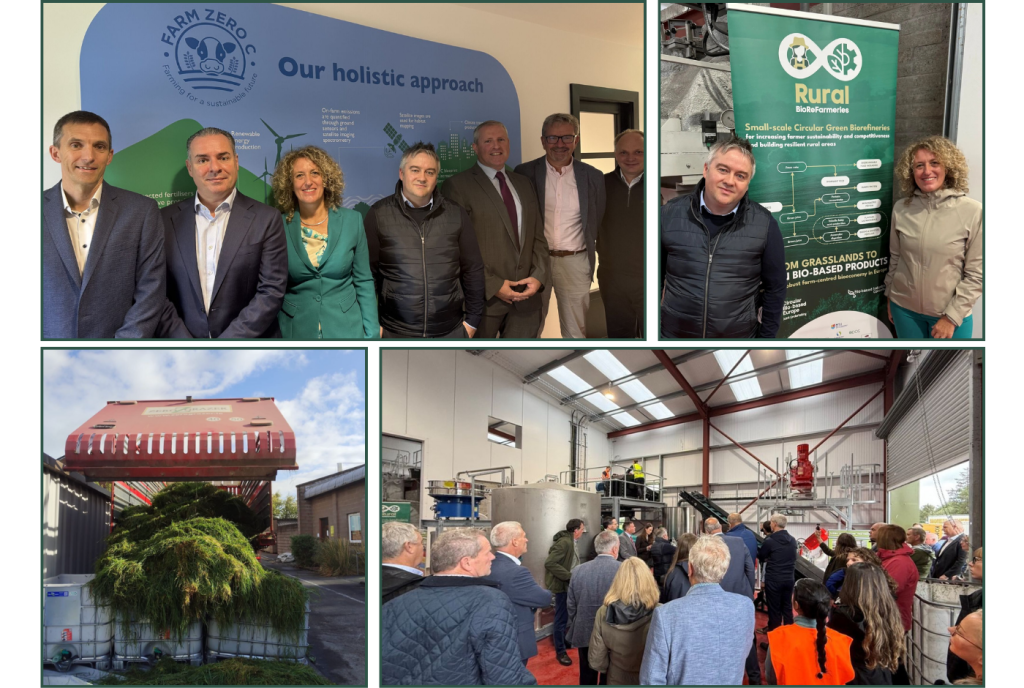
Inside Ireland’s first on-farm green biorefinery
The facility is designed to process grass and separate it into different streams. Grass is chopped and passed through a twin-screw press to extract the green juice, which is then filtered and separated into a protein fraction and a residual liquid, known as brown juice. The protein can be dried and used as a feed ingredient, while the brown juice is processed through an anaerobic digestion system on site.
The plant also allows us to investigate the recovery of other products, including volatile fatty acids, biogas and digestate. The remaining grass press cake can be used as ensiled forage for cows, while we will also explore potential applications as a biomaterial feedstock.
Our next step is to bring the different components of the system into operation and optimise the overall process. This will involve training the team, testing the individual systems, establishing how they operate together and then evaluating different processing conditions and yields.
Researchers and technical staff from several Rural BioReFarmeries partners – including Munster Technological University, University College Dublin, Carbery, University of Galway and BiOrbic – will contribute to this work, bringing expertise across engineering, microbiology, analytical science and processing.
How we got here – an evolving journey driven by research funding opportunities
Although the launch is an important milestone, the work behind the facility has been developing for several years.
Our research into grass biorefining began with the Biorefinery Glas project in 2019. Working with Irish and Dutch research and industry partners, we tested a mobile grass biorefinery system on farms that are part of Carbery’s co-operative network. This allowed us to investigate the technology in a real agricultural environment and generate data on the products that could be produced from grass.
The work continued through Farm Zero C at Shinagh Farm, where the biorefinery formed part of a wider programme investigating different approaches to reducing emissions and improving sustainability in grass-based dairy farming.
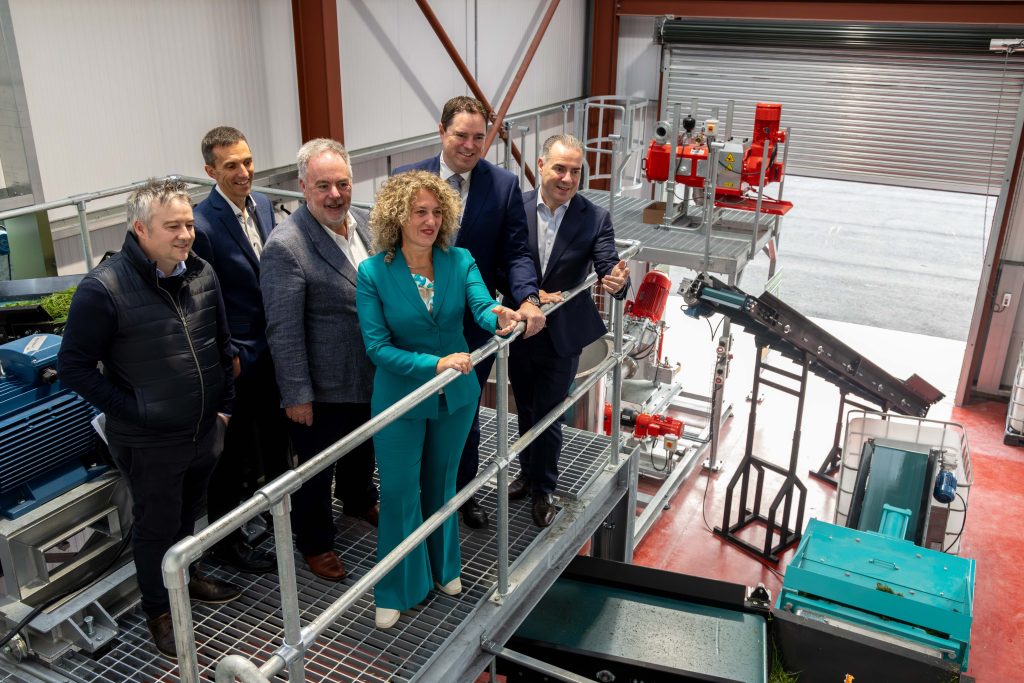
In late 2022, we secured funding from the Irish Department of Agriculture to develop a demonstration-scale green biorefinery and anaerobic digestion system at the farm. A pilot facility was subsequently developed at MTU, providing an opportunity to test and refine processes before moving to the larger demonstration plant.
Now, thanks to the support and funding received by CBE JU, Rural BioReFarmeries provides an opportunity for us to continue building on this work, and using the demonstration facility to demonstrate how small-scale green biorefineries could contribute to farmer sustainability and competitiveness.
For me, the launch represents the transition from testing the concept at pilot scale to investigating how the technology can operate at demonstration scale. There is still significant research and optimisation to do, but we now have the infrastructure to explore these questions in a real agricultural setting.
The longer-term objective is to understand how grass can be used more efficiently, creating additional products and value while supporting more resilient and circular farming systems.
Related reading: