
From grass-derived proteins and bio-based packaging to green biorefineries in action, Rural BioReFarmeries brought its approach to circular rural bioeconomy innovation to the Global Bioeconomy Summit 2026 (GBS2026), held in Dublin on 19-22 October within the Irish Presidency of the Council of the European Union.
The Summit brought together stakeholders from across the global bioeconomy, providing an opportunity for researchers, industry representatives and policymakers to exchange ideas on how bio-based solutions can move from research and innovation towards wider implementation.
For Rural BioReFarmeries, it was also an opportunity to showcase how small-scale, decentralised green biorefineries can create new value from grass while supporting more sustainable and resilient rural communities.
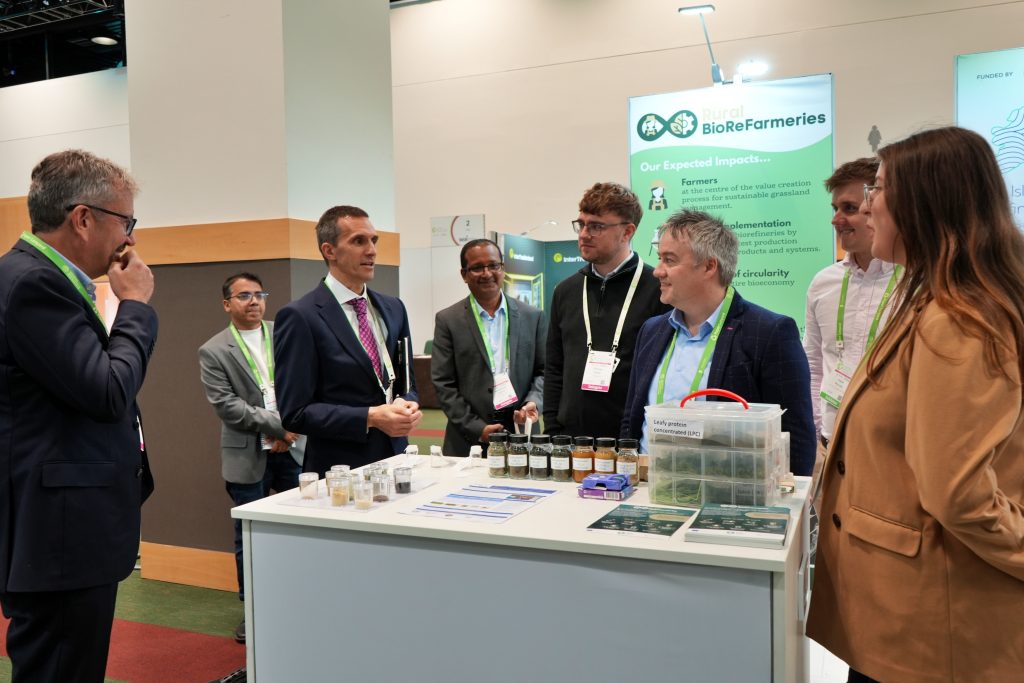
Showcasing research from across the project
Rural BioReFarmeries partners from Munster Technological University, Aarhus University, Trinity College Dublin, University of Galway, University College Dublin, NuaFund and AUSTRALO met in Dublin to represent the project and share the latest results from our work. At the dedicated RBRF stand, visitors had the opportunity to see and discuss a range of products and intermediate streams developed by project partners, including freeze-dried feedstock, brown juice, leaf protein concentrate, Volatile Fatty Acid esters and white proteins.
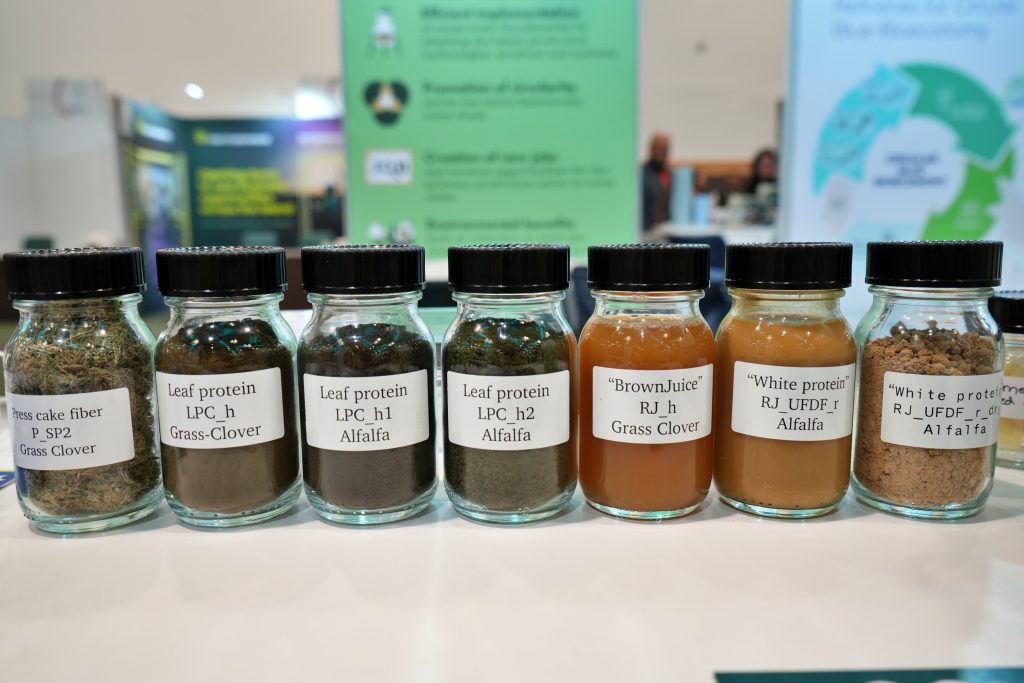
These samples provided a tangible demonstration of the different ways grass biomass can be fractionated and valorised within a biorefinery, generating multiple products for food and feed, as well as chemical and material applications.
The project’s work on bio-based materials was also represented at the Circular Bio-based Europe Joint Undertaking (CBE JU) exhibition unit, where visitors could see the latest packaging prototypes made from grass fibres developed by PaperFoam and the team from ACRRES at Wageningen University & Research.
Bringing the rural bioeconomy into policy conversations
The Summit also provided an opportunity for our project to engage directly with high-level policymakers and representatives from the European and Irish bioeconomy landscape.
As part of a series of guided tours organised by CBE JU, Rural BioReFarmeries was invited to present its latest results to Irish and European representatives, including: Taoiseach Micheál Martin, European Commissioner Jessika Roswall, Gelsomina Vigliotti from European Investment Bank, Ambassador of Italy to Ireland Nicola Faganello, and Irish Ministers Martin Heydon and Darragh O’Brien.
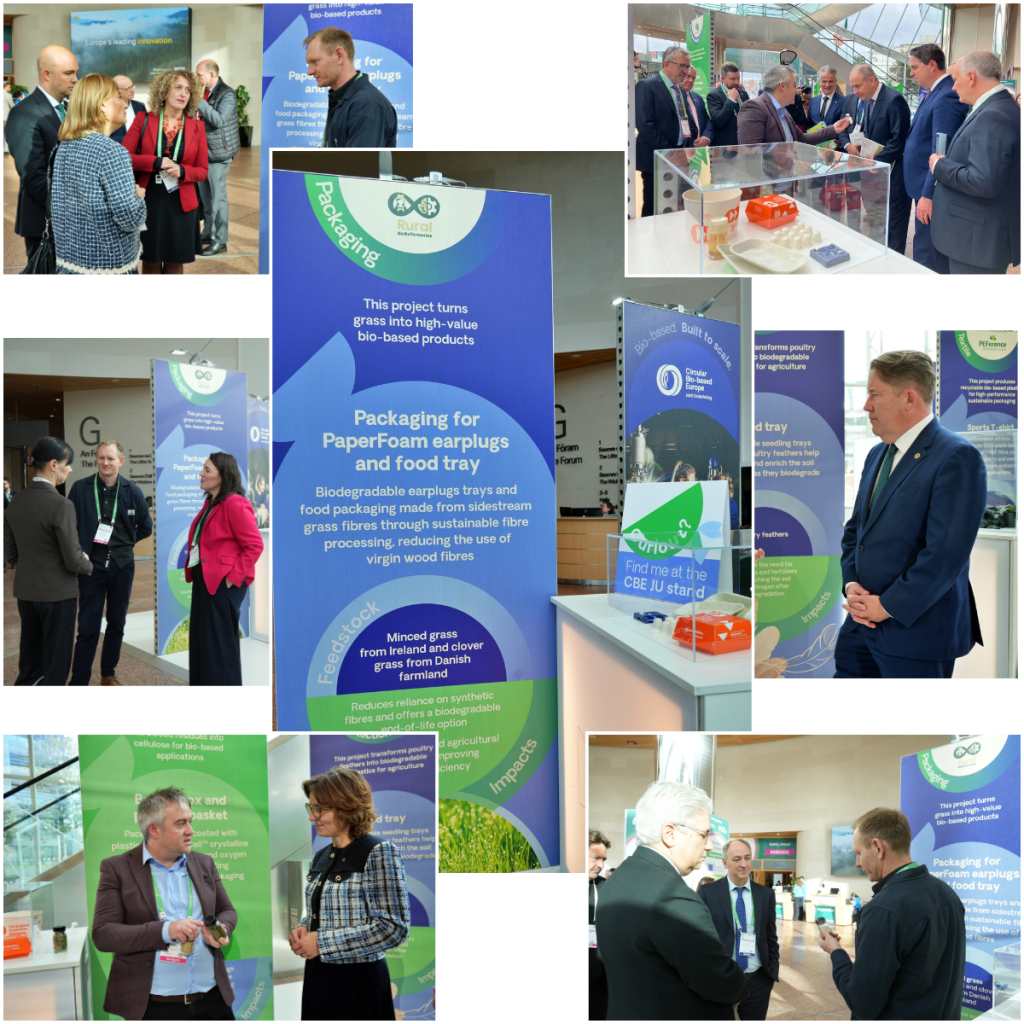
These conversations offered an opportunity to demonstrate how research and innovation in grass biorefining can contribute to broader ambitions for a circular and sustainable bioeconomy, while keeping farmers, primary producers and rural communities at the centre of the transition.
James Gaffey, our Project Coordinator, also took part in Plenary Session 4: “From Strategy to Scale: Delivering the Irish, EU & Global Bioeconomy through Policy, Markets, Innovation, and Investment”, contributing the project’s perspective to discussions on how bioeconomy solutions can move towards greater scale and impact.
From research to demonstration: visiting Farm Zero C
The project’s participation extended beyond the Summit venue itself.
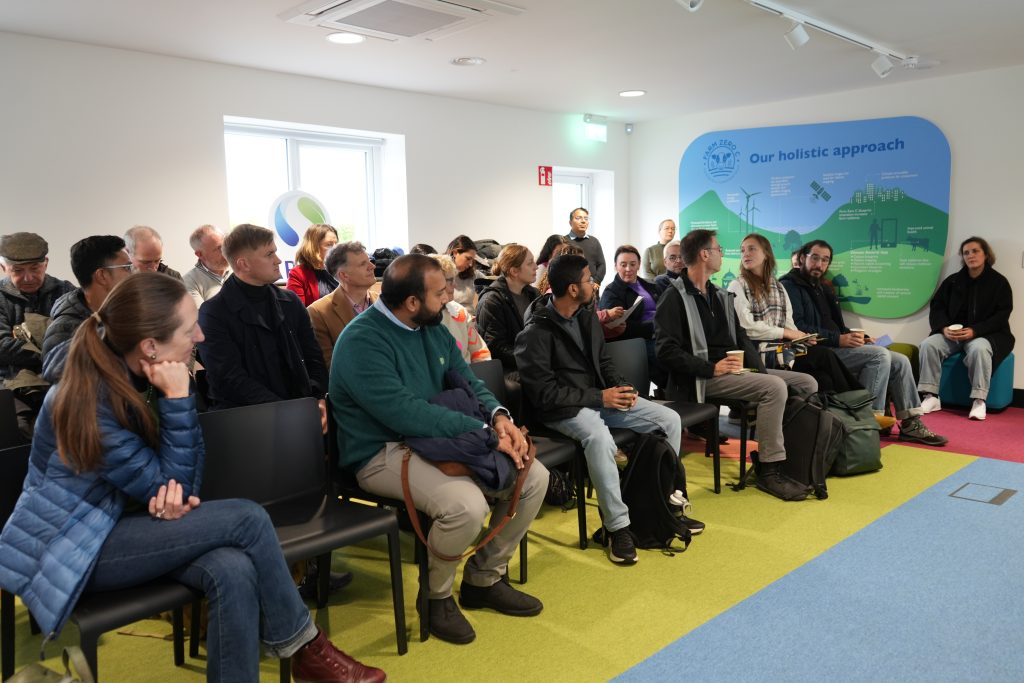
As part of the GBS2026 programme, Rural BioReFarmeries organised a guided visit to the project’s newly launched Green Biorefinery and Anaerobic Digestion demonstration site at Farm Zero C in Shinagh Estates, West Cork.
More than 20 visitors joined the tour, including researchers, industry representatives and primary producers from around the world – from as far afield as Colombia, Argentina, Kenya and India, to neighbouring regions in Europe.
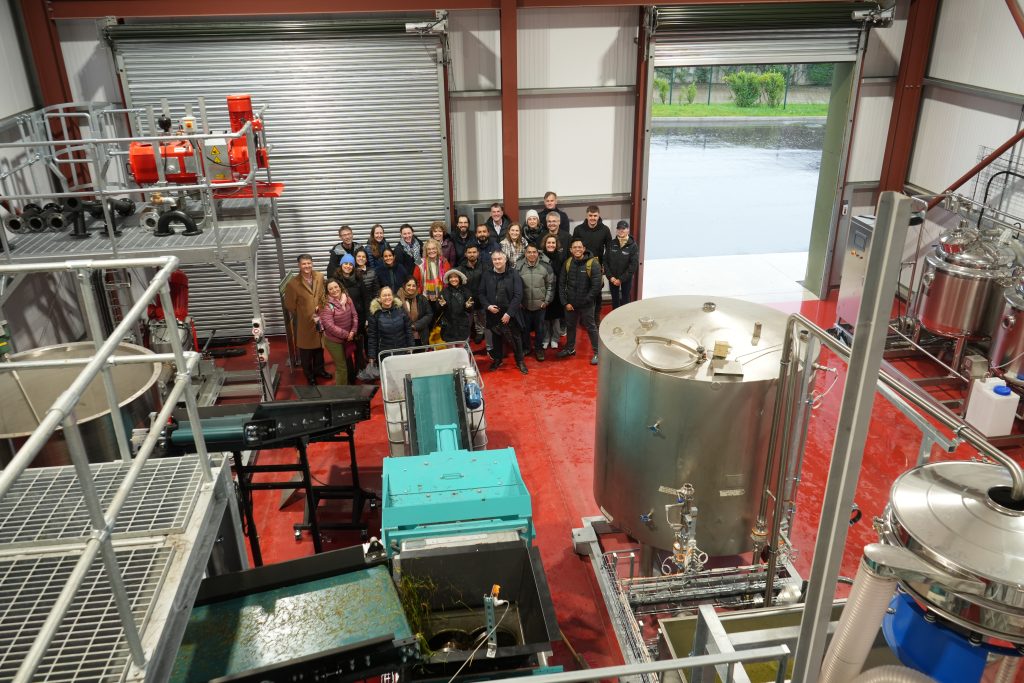
The visit provided a first-hand look at how the project’s research is being translated into a working demonstration environment, bringing together green biorefining and anaerobic digestion technologies within a real farm context. It also included presentations by some of the RBRF partners from Carbery, MTU and UCD working directly with Farm Zero C.
Connecting European innovation with the global bioeconomy
One of the key messages emerging from Rural BioReFarmeries’ participation at GBS2026 was the importance of sharing knowledge across borders.
The project is developing and demonstrating its solutions across several European countries, but the challenges it seeks to address — from resource efficiency and agricultural sustainability to rural resilience and the development of new bio-based value chains — extend well beyond Europe.
This international exchange is an important part of building a bioeconomy that can respond to different regional contexts while drawing on shared knowledge and experience.
“By bringing together research, industry, farmers, policymakers and other stakeholders, events such as the Global Bioeconomy Summit provide an important space to explore how innovations can move beyond individual projects and contribute to wider systemic change.” – James Gaffey, Project Coordinator of Rural BioReFarmeries and Co-Director of CIRCBIO at Munster Technological University
For Rural BioReFarmeries, GBS2026 was therefore more than an opportunity to showcase its latest results. It was a chance to connect the project’s grass-based biorefinery approach with a growing global conversation about how rural areas can play a central role in the transition towards a circular bioeconomy.