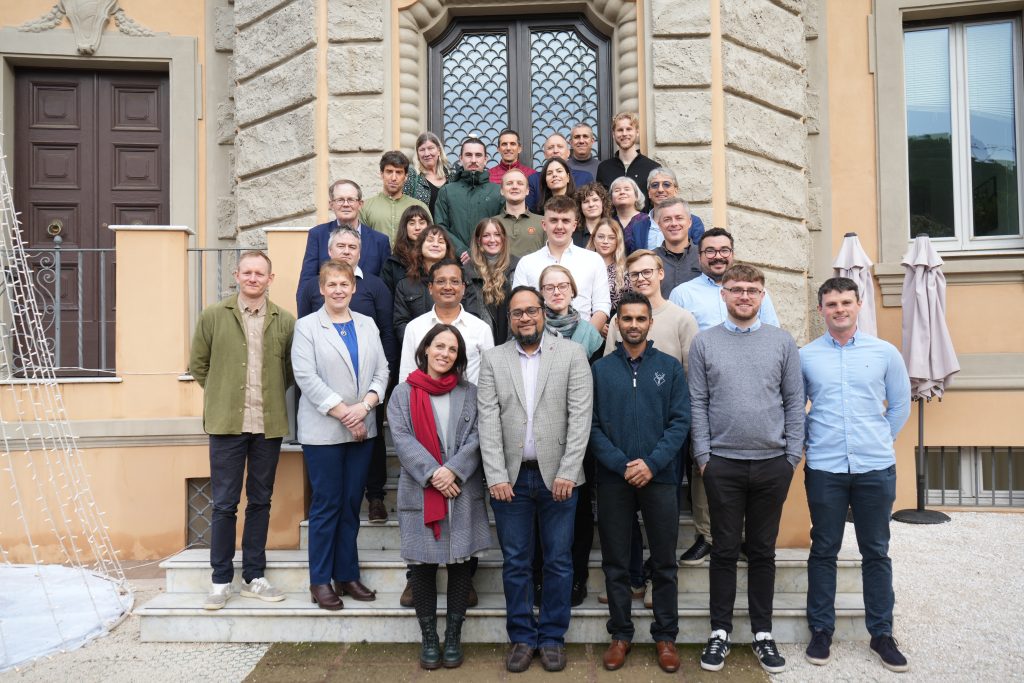
The Rural BioReFarmeries (RBRF) consortium gathered in Rome on 4-5 December 2025 for its end-of-year General Assembly, hosted by the team from Unitelma Sapienza in their premises at the heart of the eternal city.
The meeting, which also coincided with the official first anniversary of the project, brought together over 40 representatives from the 19 RBRF partners to reflect on the progress achieved during the first 12 months, and to define the key objectives for 2026.
TL;DR: Top 5 achievements in year 1
- We mapped out four ways green biorefineries can be set up in Europe, giving the project a clear roadmap for real-world deployment.
- We ran large demo-scale tests on grass–clover throughout the year, creating a strong dataset on how green biorefineries perform in practice.
- We kicked off pilot-scale biorefinery operations, taking a major step from planning to real, on-the-ground processing.
- We turned grass residues into fibre pulp and created our first sustainable packaging samples, showing how grass can become a real circular product.
- We built the foundations for a full sustainability assessment, making sure the project can measure environmental, economic, social and biodiversity impacts accurately.
During its first year, Rural BioReFarmeries has moved from conceptual design towards early implementation. Discussions during the General Assembly in Rome highlighted how the different Work Packages have progressed in parallel – from supply chain modelling and pilot-scale processing to prototype products and the foundations of an integrated sustainability framework – laying the groundwork for the next phase of demonstration and evaluation.
“I think we’ve made really good progress over the first year. We’ve started to scale technologies from bench up to pilot in Ireland and Denmark, and up to demonstration scale in Denmark as well. We’re also starting to develop some prototype products from our different work packages, including the development of fibre-based packaging products produced from grass press, and the development of white protein materials which will be further tested within the project.” –– James Gaffey, RBRF Project Coordinator.
Keep on reading to learn more about what’s been achieved in this first year towards building small-scale, farmer-centred green biorefinery models for rural Europe.
Designing sustainable and efficient supply chains for green biorefineries
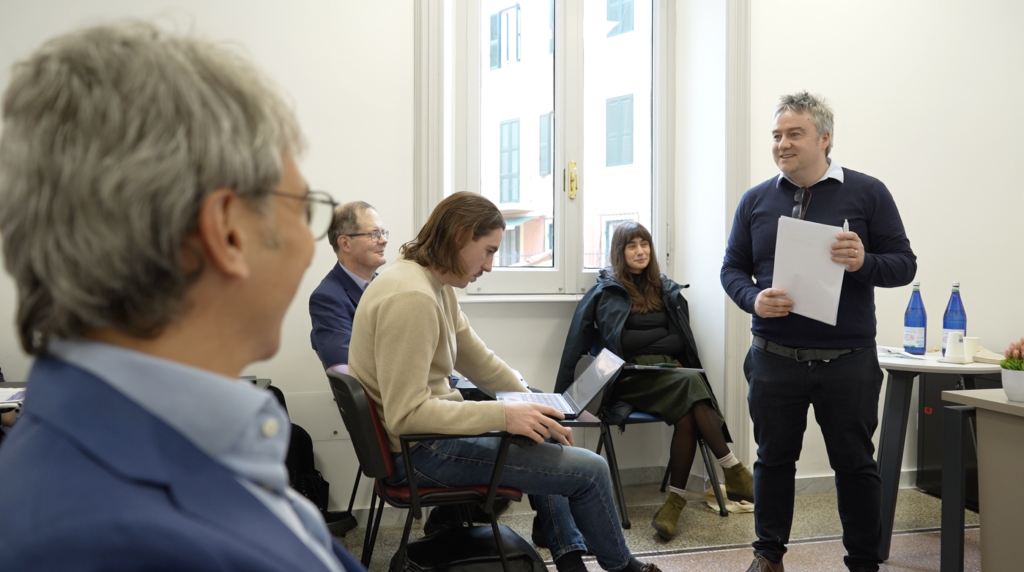
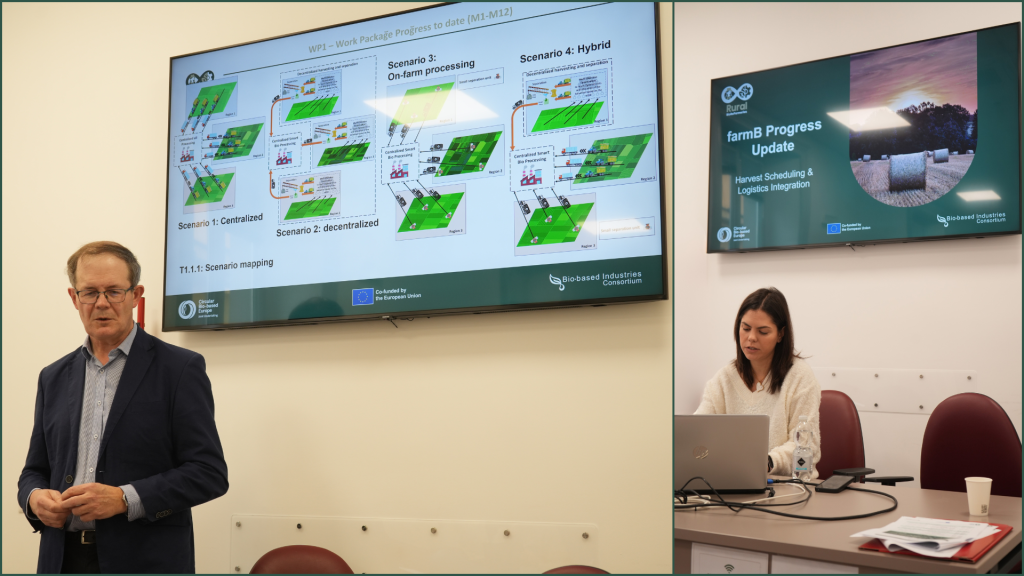
Researchers from Aarhus University’s Department of Electrical and Computer Engineering, in collaboration with other partners involved in Work Package 1, have focused on addressing one of the core challenges of grass-based biorefineries: how to design supply chains that are both technically efficient and viable for farmers in rural areas.
WP1 developed four fully modelled deployment scenarios (centralised, decentralised wet fractionation, on-farm processing and hybrid models), capturing the full range of ways green biorefineries could be implemented across Europe. These scenarios go beyond conceptual diagrams, providing structured process flows and data architectures that now underpin the project’s ICT-based logistics planning and optimisation tools.
These scenarios are already guiding the preparation of pilot activities in Ireland and Denmark, ensuring that future demonstration work is grounded in realistic, farmer-centred supply chain configurations.
From bench to demo scale: advancing green biorefinery operations
The teams in Work Package 2 have been building the technical backbone of the Rural BioReFarmeries concept by generating robust data on feedstocks, processing performance and seasonal variability.
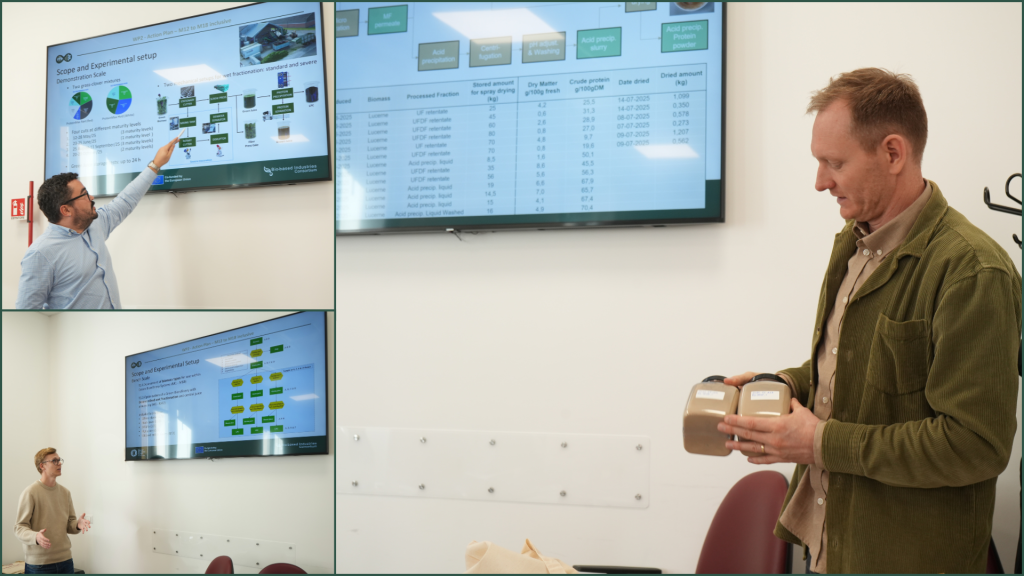
Over the first year, partners have tested and characterised 10 different green biomass feedstocks and products at bench scale.
At demonstration-scale in AU Viborg, in Denmark, CBIO at Aarhus University have successfully processed two grass–clover mixtures across four seasonal cuts and varying maturities, producing leaf protein concentrate, press cake fibre and brown juice while measuring mass balances and protein yield.
In parallel, pilot-scale green biorefinery activities have been initiated by CIRCBIO at MTU in Ireland, marking a significant step from lab research towards real-world operation through the involvement of the demo site at Farm Zero C.
Together, these activities have generated a uniquely rich dataset that feeds directly into WP1’s smart logistics tools and supports future optimisation and decision-making.
Turning residues into value: circular bio-based products from grass
A key ambition of Rural BioReFarmeries is to ensure that all process streams are valorised. In this first year, Work Package 3 has demonstrated how grass residues can be transformed into new, high-value bio-based products.
Researchers from ACRRES at Wageningen University & Research have successfully processed grass provided by Danish partners through anaerobic digestion, and further refined it into grass fibre pulp. This pulp was then used to produce the first packaging test samples in collaboration with PaperFoam, providing a tangible proof of concept for fibre-based, bio-based packaging derived from biorefinery residues.
At the same time, the team at ACRRES together with AlgaNed have also developed a small pilot photobioreactor and carried out initial characterisation of algal growth on digestate, opening up further opportunities for nutrient recycling and biomass production within the biorefinery system.
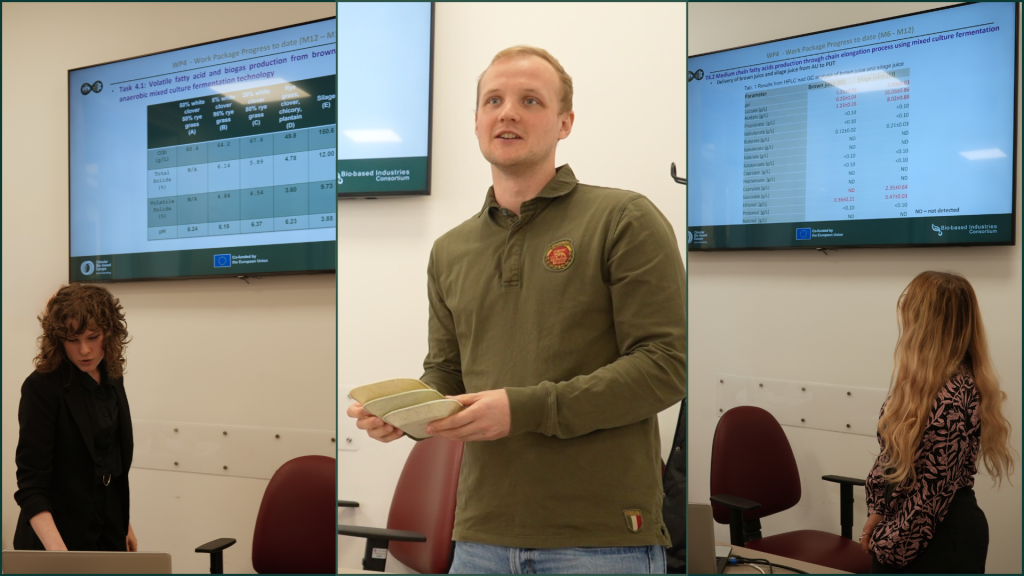
In Work Package 4, microbiologists and biotechnologists from University of Galway and Poznan University of Technology have also started the first tests to convert brown juice residues from the biorefined grass processes in Ireland and Denmark in WP2; the goal is to turn this otherwise considered ‘waste’ byproduct into value-added products, such as VFA’s and biogas, with further plans to scale up these advanced anaerobic digestion approaches.
Building the sustainability assessment framework
Alongside technical development, the first year of RBRF has focused strongly on ensuring that environmental, economic and social impacts can be assessed in a rigorous and integrated way.
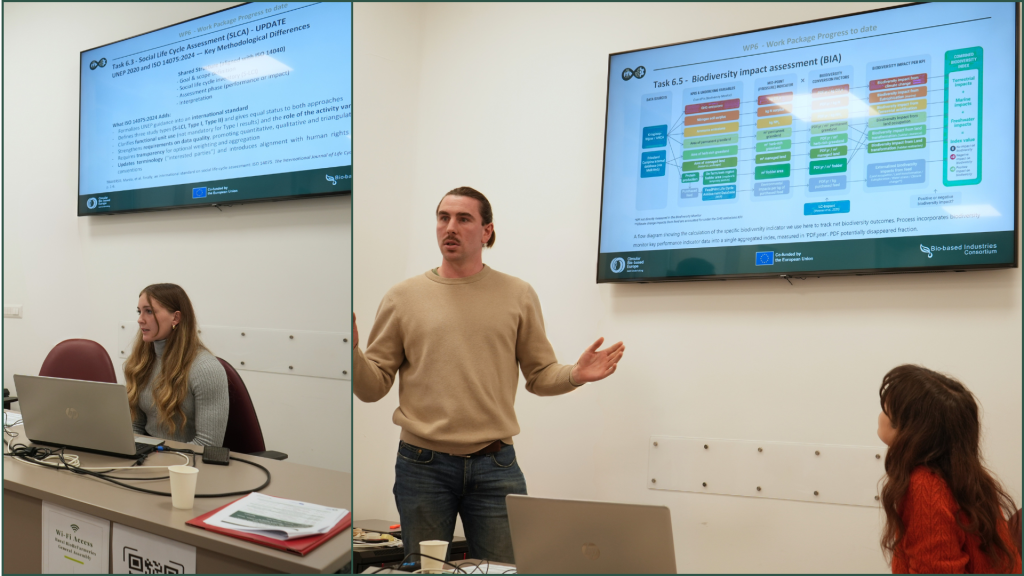
Work Package 6, led by the Bioeconomy in Transition Research Group at Unitelma Sapienza, has established the methodological foundations for the project’s sustainability assessment framework. This included a systematic review of existing Life Cycle Assessment (LCA), Techno-Economic Assessment (TEA), Social LCA and Biodiversity Impact Assessment practices in bio-based systems, identifying both strengths and key gaps – particularly in relation to social and biodiversity dimensions and rural, decentralised contexts.
Initial work on Social LCA and TEA has already begun, with system boundaries defined, early data collected from pilot partners, and stakeholder and impact mapping underway. In the coming phase, this groundwork will enable applied sustainability evaluations across RBRF’s demonstration sites.
Laying the groundwork for business models and stakeholder engagement
Beyond technical and environmental assessment, the first year has also focused on understanding how green biorefineries can function as viable rural businesses and how they can be embedded in local ecosystems.
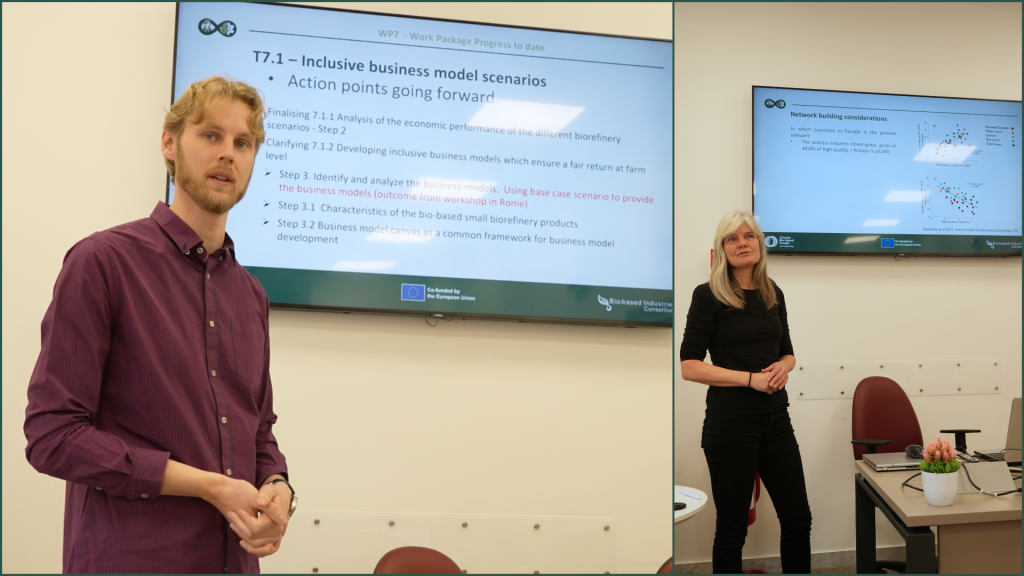
In this line, experts from SEGES Innovation have established the foundations upon which the Rural BioReFarmeries Network will be built – a EU-wide network that will bring together primary producers, farming cooperatives, industry experts, policy-makers, and bio-economy researchers and innovators.
On the communication and dissemination front, the team from AUSTRALO have also reported great progress in growing a robust online presence for the project; with a community of nearly 2,000 followers on social media (LinkedIn, X, Bluesky and YouTube), the RBRF mission is not only capturing the interest of researchers and scientists, but is also resonating among key relevant stakeholders from across the entire bioeconomy ecosystem, in Europe and beyond.
Overall, the objectives set under Work Package 7 are helping to ensure that the technical innovations developed within the project are aligned with real-world economic conditions and stakeholder needs.
What’s next? Looking ahead to 2026
The discussions in Rome made clear that the second year of Rural BioReFarmeries will mark a shift from methodological setup to applied demonstration and evaluation. Priorities for the coming year include scaling pilot activities, launching demonstration platforms, refining prototype products, and applying the integrated sustainability framework across real-life cases.