
Cathal O’ Donovan splits his professional life in two very intertwined professions: farm manager at Carhue Piggeries Ltd. and swine veterinarian at Moss Vet Group. He is also now involved in the Rural BioReFarmeries project, where he will be working alongside interdisciplinary researchers to understand if proteins derived from grass can be effectively used as feed for pigs, and explore the production of grass-based anti-microbial additives to improve pigs’ gut health. Cathal will also act as a bridge between the science and real-life farming challenges and expectations, to ensure farmers’ voices are represented within the project.
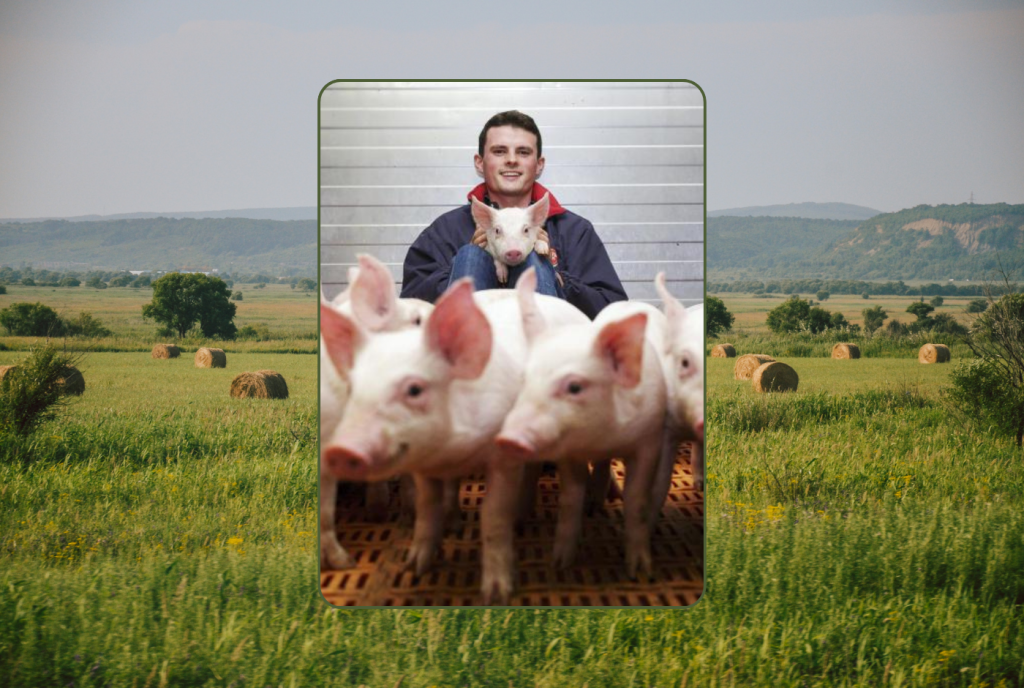
Hi Cathal! Can you tell us a bit about your background and what you do currently?
I studied Veterinary Medicine at University College Dublin, where I graduated in 2020, and then I specialised in pig farm management and pig’s health. Today, I’m a part-time swine vet at Moss Veterinary, a veterinarian practice dedicated to intensive agriculture; I also do some work in a local abattoir as a veterinary inspector.
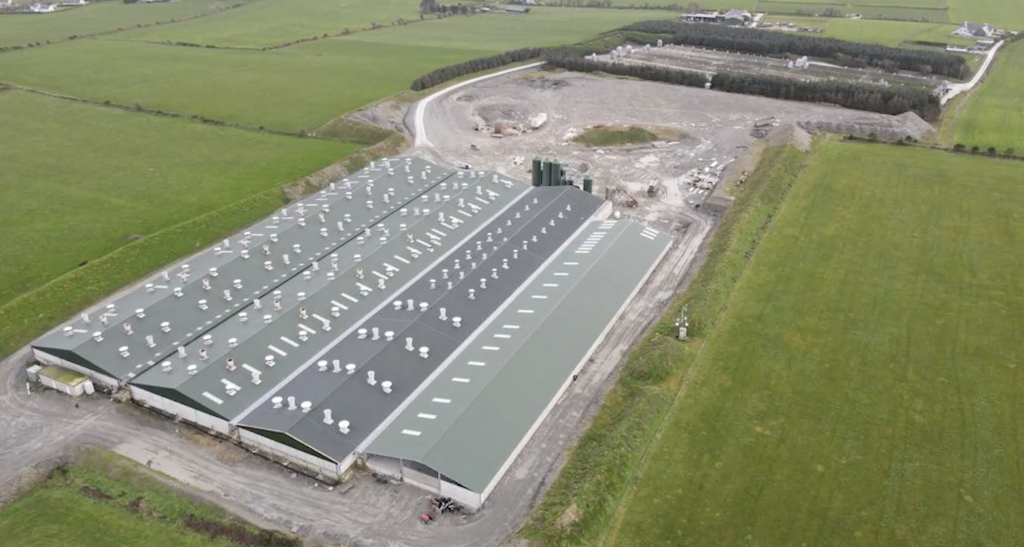
When I’m not wearing my vet coat, I help to manage Carhue Piggeries, my parents’ farm in Timoleague. We have a family-run business where we’ve been producing pigs for almost 40 years.
It sounds like you’re quite busy! Did your passion for veterinary medicine come from your connection to your family’s farm?
Exactly, yes! I’ve been involved in the family farm for as long as I can remember at different levels. So, that was obviously where my interest came from.
Also, during my degree, my focus was on pig medicine and pig health, and I got to spend some time in Denmark and The Netherlands, where I learned from their pig production systems, and overall animal management and welfare.
You’re now going to play a key role in Rural BioReFarmeries, as one of the main bridges connecting the scientific and the farming sides of the project. Why did you decide to join this European initiative?
I have always wanted to be involved in research. I love discovering new ideas on how we can produce high quality pork sustainably, and how to adopt circular practices by working with local partners and other enterprises.
I’m interested in learning how to implement innovative and advanced food production systems, ensuring a farm can be profitable and sustainable, while providing the best conditions for the wellbeing of pigs (and other animals).
I had already been involved in a previous EU-funded project called Biorefinery Glas, where I worked with some of the partners that are now part of Rural BioReFarmeries, including Munster Technological University. Another business which we are involved in complimented that project nicely: a local commercial anaerobic digestion facility, providing slurry from the pig farm to produce renewable biogas.
When James Gaffey from MTU told me about RBRF, and their ambition to develop new high-protein feeds from locally sourced grass, it was an absolute no-brainer for us.
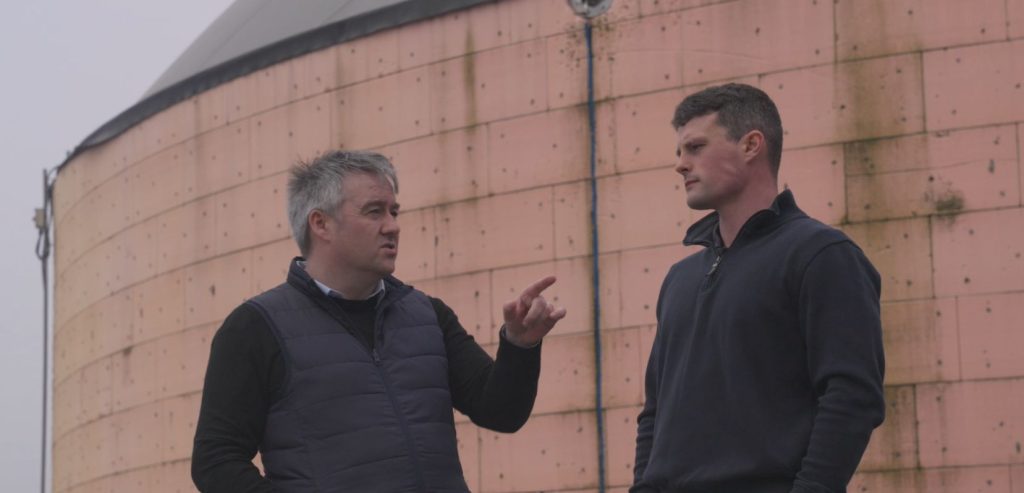
What specific part of the project will you be involved in?
In representation of Carhue Piggeries, I will be working in collaboration with other partners in the project on two main tasks.
The first one is focused on developing a system to efficiently extract protein from grass and incorporate that into the pigs’ diet, while ensuring their health and performance is not compromised. From a sustainable point of view, this approach is far better than importing soybean meal from North America, South America or Canada, for example.
The other element we’re researching is the production of grass-based anti-microbial additives to improve pigs’ gut health.
How can grass help to improve pigs’ gut health? Can you elaborate on that?
Feed is the biggest cost in pig production, and it’s typically made up of ingredients like wheat, barley, maize and soybean meal. The whole business really comes down to how efficiently a pig can turn that feed into high-quality, lean meat, and that transformation happens in the gut.
In Rural BioReFarmeries, we’ll be exploring how the liquid fraction that comes out of biorefined grass could be used as a feed additive that supports pig gut health. It’s ambitious, but the impact on both swine welfare and farm performance could be huge.
If a grass-based ingredient can help the gut work better, it would also improve feed conversion, increase growth rates, lower feed costs and support the pig’s overall health. In simple terms, a healthier gut means the pig can digest and absorb nutrients more efficiently, and that directly affects how well feed is turned into meat.
One of the main ambitions of this project is to replicate a small-scale green biorefinery model across different countries. From your experience, what should we keep in mind when approaching farmers?
People tend to think that farmers are stuck in their old ways, but that’s far from the truth. Farmers are always interested in trying new things, they want to continuously explore new opportunities to make their business sustainable – both financially and environmentally.
The side of the work I will be involved in won’t start until halfway through the project, but I’m sure once we get the results from the first trials, farmers will be really interested to hear more about what we’ve found and what potential opportunities might be there for them.
However, as much as farmers may be interested in the novelty of different or exciting practices, like green biorefineries, their main concern will always revolve around maintaining and growing their business. When I tell my colleagues or other farmers about what we’re doing in Rural BioReFarmeries, the big question I always get in return is: “How will this help me make or save money?”
If we can demonstrate the impact these new technologies can bring into their day-to-day operations, I’m sure farmers will be keen to learn more and potentially take an active role.
The Irish farming community is very, very small. It’s a real close knit network of people that are all trying to work together to benefit each other in different ways. We all want to see the Irish agri sector thriving, so we’d be happy to see advancements in the sector, especially if it means everyone involved can be an active player in a circular economy.
There’s no denial that the active involvement of farmers will be crucial for the success of the project. But how can we ensure they don’t feel ‘used’?
That’s a very good question, and it’s actually something I think about quite a lot.
Rural BioReFarmeries is a very ambitious project, and it has huge potential to make a real difference, not only for farmers but for the whole rural community; but they might feel like they’re putting their livelihoods at risk because we’re asking them to do a lot for us.
Farmers have a business to run, and being involved in this type of project means they have to invest extra time, energy and resources. With that in mind, my main concern would be to make sure that we don’t make any empty promises, and that we’re very clear and transparent on how green biorefineries can impact their businesses.
Although, I also want to say that, even though I’m only involved in a relatively small part of the project, I’m very happy to be working with partners that genuinely care about the future of farming and are willing to listen to what farmers have to say, so they can learn from their experiences firsthand. I hope we can get this message across, and that the significance and the ambition of the project is acknowledged.
Is there a message you’d like to share with farmers who may be unsure about participating in research projects?
As a farmer myself, I understand that time is precious, and taking part in projects like these can feel like hassle. But the reality is that these activities could have a positive impact on your business, and you could end up playing a key role in creating a better future for farming and the wider agricultural and food industries.
Do you want to see yourself as a short term player or a long term player? If you want to be involved in the industry for a long time, then you should be at the forefront of any future developments that may come your way.