
Each month, Work Package Leaders and other partners in the Rural BioReFarmeries (RBRF) consortium gather online to share their latest progress, insights and achievements during the Executive Board meetings.
These monthly updates highlight what’s happening across the consortium — from scientific work in the lab to outreach and communication efforts across Europe — offering a snapshot of how RBRF is advancing towards its goal of demonstrating how small-scale green biorefineries can advance a circular bioeconomy in the EU while empowering rural regions.
During January, our partners have made progress on logistics modelling, pilot-scale biorefinery activities, biomass characterisation and life cycle assessment work. Read on to find out more!
Updates from our work packages 🍀
WP1 – Sustainable Local Supply Chain Optimisation
The Aarhus University team has launched a survey for farmers in Ireland and Denmark to better understand their engagement with green biorefinery operations. The results will feed directly into a new deliverable, which focuses on mapping different biomass supply chain configurations.
At the same time, work is also progressing on the logistics model, which is set to be calibrated and tested once real-world inputs become available, including transport distances and processing data collected from the Danish demo site. FarmB is also set to use the data from upcoming field experiments to train the machine learning models that will feed into the harvest scheduling system.
WP2 – Rural Green Biorefineries
Partners from CIRCBIO at Munster Technology University and CBIO at Aarhus University have been aligning approaches across Ireland and Denmark to ensure consistency in biomass characterisation and bench-scale analysis. This new phase expands the range of feedstocks analysed and includes additional parameters such as white protein, and will serve as the basis for an upcoming report on green biorefinery feedstock suitability assessment.
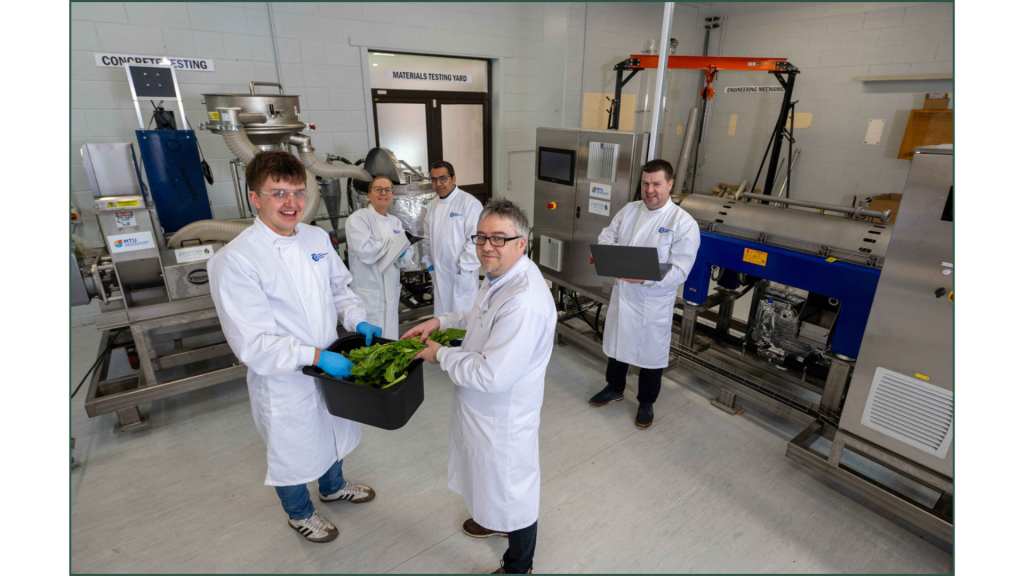
In Ireland, researchers from MTU are preparing for scale-up activities, following the installation of the new upstream green biorefinery pilot plant. In parallel, Aarhus University has commenced storage-focused bench work, which will feed into the decentralised biorefinery modelling.
WP3 – Bio-based Fibre and Packaging Development
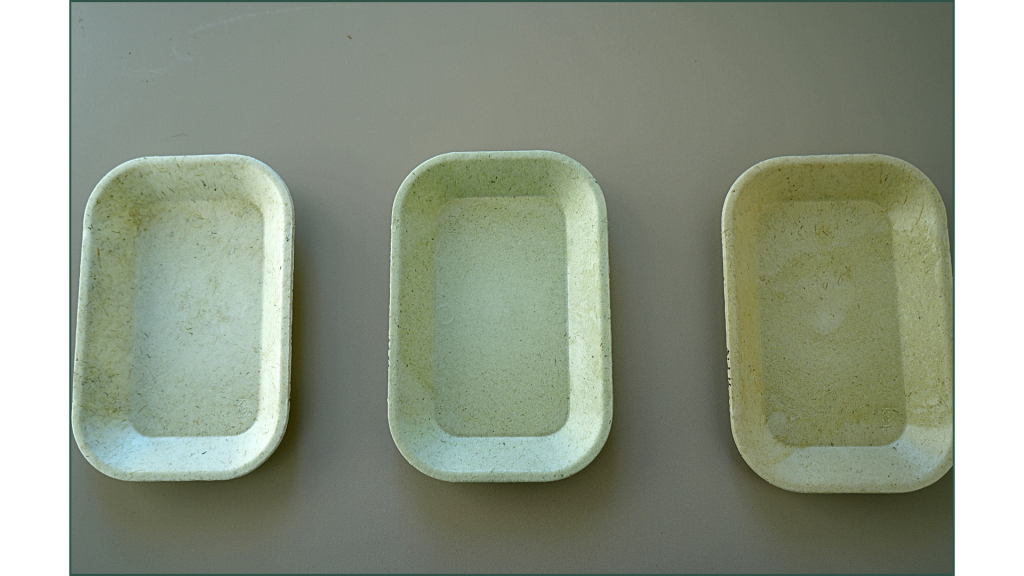
WP3 continues to advance both grass fibre processing and algae cultivation systems.
After presenting the grass-based packaging samples during the latest General Assembly in Rome, the team from ACRRES at Wageningen University & Research have continued working with PaperFoam to develop improved prototypes.
Work on algae cultivation is focusing on improving small- and larger-scale systems. Recent activities conducted by the ACRRES team and AlgaNed have centred on machinery optimisation, testing new algae species, and planning CO₂ regulation for small-scale bioreactors.
WP4 – Production of Fatty Acids, Biogas and Nutrients from Brown Juice
Significant progress has been made on batch evaluations of biogas and volatile fatty acid (VFA) production, alongside nutrient and physical characterisation activities. With this phase nearing completion, the team is preparing to transition to continuous reactor trials, using silage juice supplied by MTU as the initial feedstock.
Trinity College Dublin will join the efforts to continue experimental work, having welcomed Mukesh Pednekar into the team, who brings additional expertise in VFA separation and purification.
WP5 – High-value Food, Flavours and Antimicrobials
The Carbery team has started analysing samples received from Denmark, focusing on composition and microbial profiling as a foundation for upcoming functionality testing.
At University College Dublin, the required distillation and fractionation equipment has been installed, training has been completed, and a new postdoctoral researcher has joined the team.
WP6 – Environmental and Socio-Economic Performance
Unitelma Sapienza has started preparing a scientific publication based on the first deliverable in this work package, focused on a literature review of previous studies conducted in the field of sustainability and biorefining. The team is coordinating with AUSTRALO to create an online repository to support project-wide communication of literature review findings.
Further work has also advanced on the tasks related to Life Cycle Assessment (LCA) and Social LCA tasks. A base-case LCA model is now targeted for springtime, being developed in close cooperation with the partners from ODOS and Poznan University of Technology.
In other news 🗞️
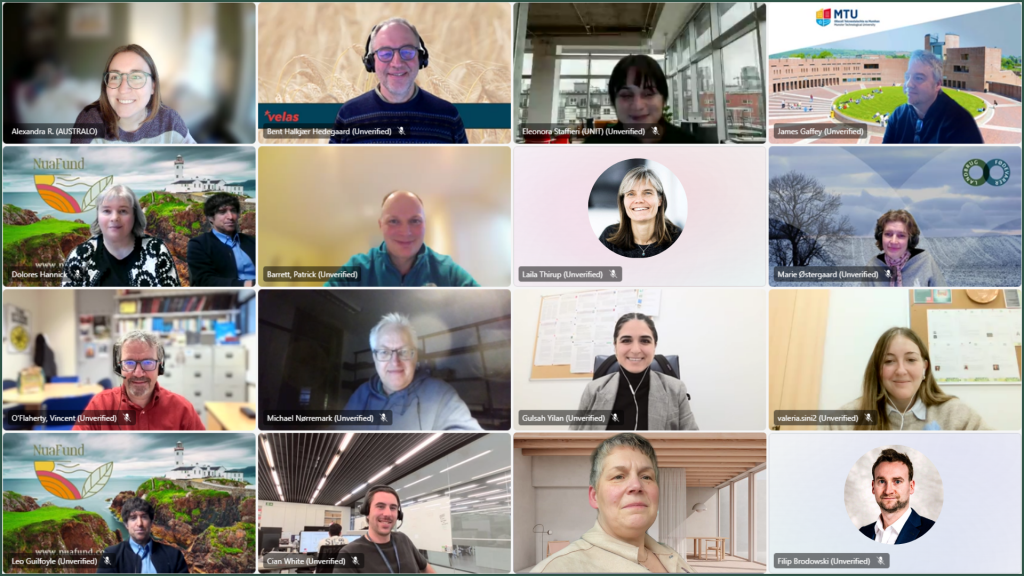
First AB meeting: The RBRF consortium held the first Advisory Board (AB) meeting online, where project partners gave an overview of the project and the progress made so far. This meeting marked the official welcome to the 8 experts joining as AB members; in their role, they will support the RBRF consortium in solving current challenges related to the implementation of green biorefinery systems in Europe – from offering closer connections to farmers across different regions in Europe, to facilitating opportunities towards EU policy strategies contributions on the bioeconomy.
New bilateral collaboration: RBRF has now established tie with Nutri-check Net, an initiative jointly funded by the European Union and UK Research and Innovation (UKRI) to establish a self-sustaining, multi-actor, thematic network that builds farm-level adoption of best field-specific nutrient management practices across Europe. Learn more about their work on our Strategic Cooperation page.
What’s next 🧭
Over the coming months, partners will continue advancing pilot and demonstration-scale activities, with increased focus on spring field experiments, fresh biomass processing and continuous reactor trials. Coordination across work packages will intensify as modelling, LCA and business case development move forward in parallel.