
On 24 March 2026, the Circular Bio-based Europe Joint Undertaking (CBE JU) hosted its annual Stakeholder Forum in Brussels, bringing together key actors from across Europe’s bioeconomy.
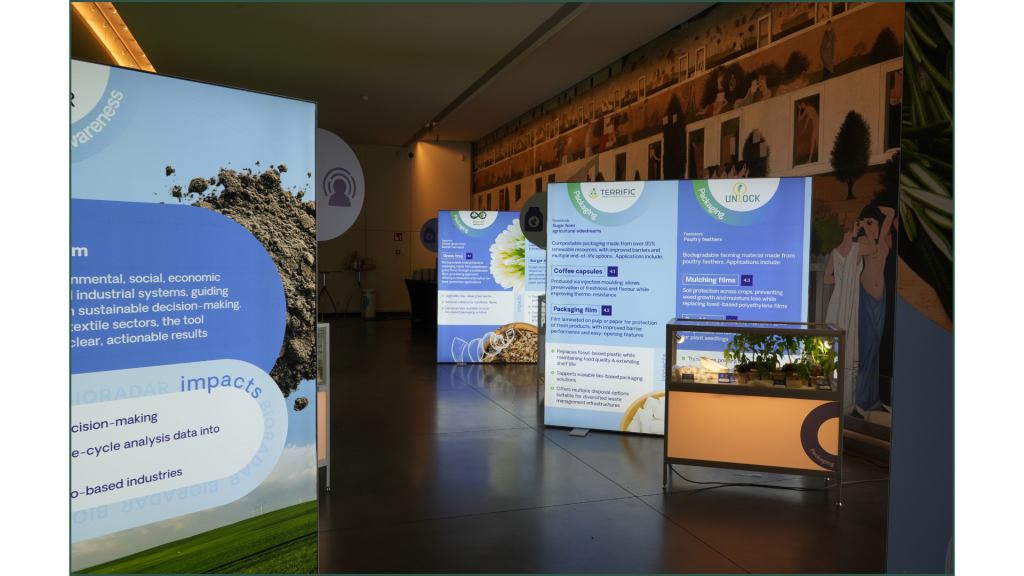
The annual event serves as a central meeting point for researchers, industry leaders, policymakers and innovators to exchange knowledge, discuss challenges in the sector and shape the future of bio-based industries. This year, Rural BioReFarmeries (RBRF) was selected to participate in an exhibition of bio-based materials, products and technologies developed by CBE JU-funded projects.
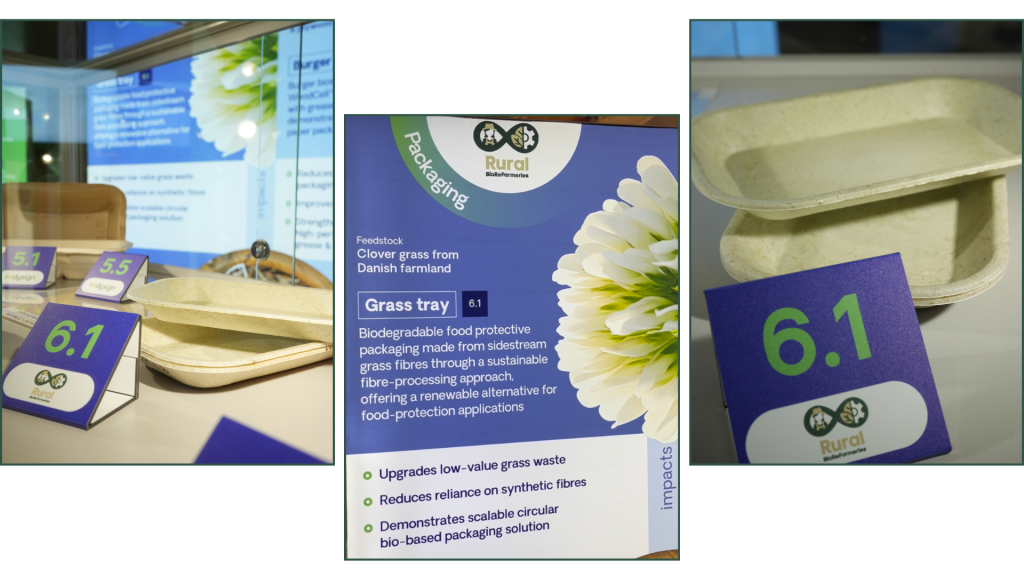
Showcasing tangible results
Among the 40+ innovations showcased, RBRF presented its first prototypes of grass-based packaging, developed by ACRRES at Wagening University & Research in collaboration with PaperFoam, using grass fibres provided by researchers from Aarhus University.
This recognition marks a major achievement for the project and reflects the strength of its interdisciplinary collaboration, demonstrating how cross-sector partnerships can translate research into real, market-relevant solutions.
Showcasing these materials at a European-level event not only validates the project’s approach but also reinforces the potential of grass-based biomass as a sustainable alternative in the packaging sector.
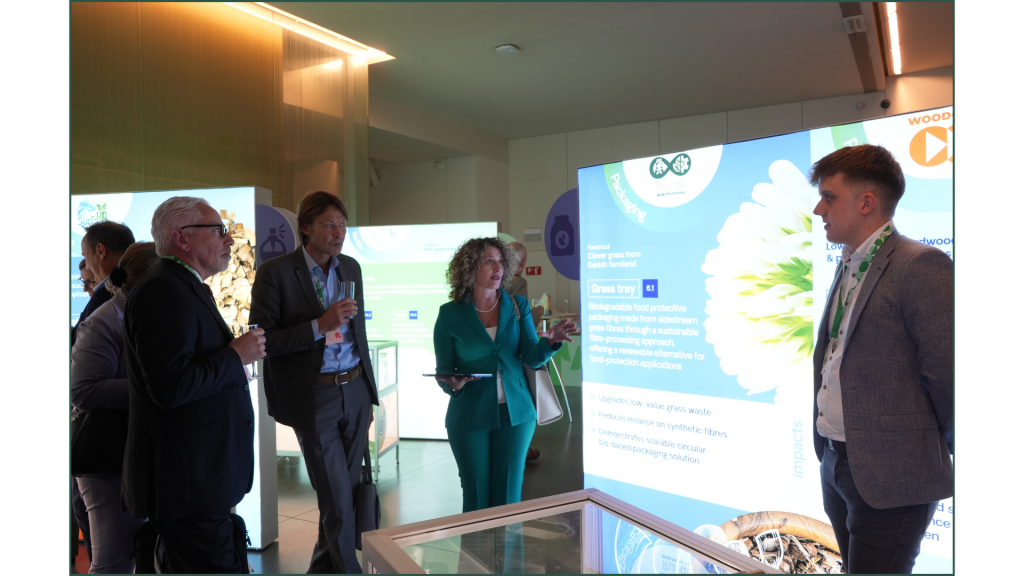
Adam Mulcahy, Biorefinery Demonstration Plant Engineer at Munster Technological University, attended the CBE JU Stakeholder Forum in representation of Rural BioReFarmeries to connect with fellow bio-based innovators and learn more about other initiatives advancing a circular bioeconomy across the EU.
During his attendance, Adam had the opportunity to present the mission of the project during a VIP tour of the exhibition led by Virginia Puzzolo (Head of Programme Unit at CBE JU), which included the presence of James Morrison, (Director of Healthy Planet at European Commission) and Rob Beekers (Director of Business Development at Cargill’s Bio Industrial Group), among other top-level stakeholders.
Participating in the Forum not only allowed Rural BioReFarmeries to showcase its progress, but also reinforced its role within a broader European effort to drive sustainable, bio-based innovation forward.
Moving from strategy to action
This year’s CBE JU Stakeholder Forum centered its discussions around a main topic: how do we overcome existing barriers to effectively bring bio-based innovations from the lab to the market?
Nicoló Giacomuzzi-Moore (Executive Director at CBE JU) kicked off the day with a reminder of the forum’s mission: “We’re here to celebrate what CBE JU is all about, which is impact. Our goal is to provide sustainable solutions that benefit both citizens and the environment, but we need to identify the best ways in which we can move these innovations from the lab right up to full scale commercialisation.”
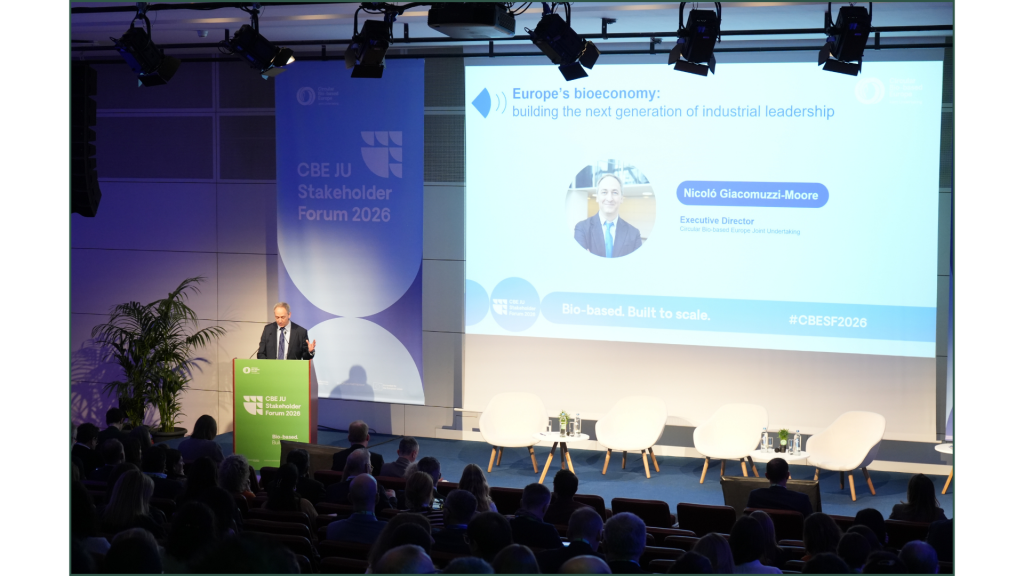
Giacomuzzi’s opening statement was followed by inspiring words from Eric Mamer (Director General for the Environment at European Commission), who reflected on how the bioeconomy contributes to Europe’s competitiveness. In reference to the current geopolitical situation, Mamer reinforced the EC’s commitment to continue supporting bio-based innovation, and acknowledge its role in securing Europe’s strategic autonomy and food security.
Speakers in the two main panels explored the challenges of scaling up technologies from demonstration to commercialisation, highlighting key barriers such as regulatory complexity, access to finance and the need for stable, long-term investment conditions. The closing plenary brought these themes together, focusing on how Europe can strengthen its competitiveness in the global bioeconomy by better aligning policy and industry needs, while ensuring that innovation can effectively transition into real-world, scalable solutions.
After a full day of conversations and thought-provoking discussions, Adam Mulcahy took home three key messages:
- Sharing knowledge on failures accelerates progress and saves money. There was a strong message around the value of being open about what hasn’t worked, especially in industry. If we can normalise sharing failures as well as successes, we avoid repeating the same costly mistakes and the whole sector moves quicker as a result.
- Sustainable biomass supply is a real bottleneck. Even where innovation is happening, scaling up can stall if there isn’t enough reliable, sustainable biomass to feed it. This came up as a challenge to speeding up bio-based innovation, and it’s something the sector needs to tackle head on.
- These forums play a huge part in bringing the bioeconomy forward. Bringing regulators, innovators, industry leaders and policymakers in the same room makes a real difference. All parties get a much clearer picture of what works in practice and what doesn’t, and that kind of direct dialogue is hard to replicate any other way. Events like this one are a key part of accelerating the European bioeconomy.
For the Rural BioReFarmeries project, being represented at this forum was a major opportunity to connect with the wider bio-based community and showcase tangible results. We look forward to next year’s edition!