
Andreas Gravholt is a consultant at SEGES Innovation, where he works closely with primary producers to help them adopt more sustainable tools and practices. In this interview, he talks about what led him to pursue a career in biotechnology, where his passion for nature and the environment comes from, and his vision for bringing green biorefining technologies to farmers across Europe through his involvement in Rural BioReFarmeries.
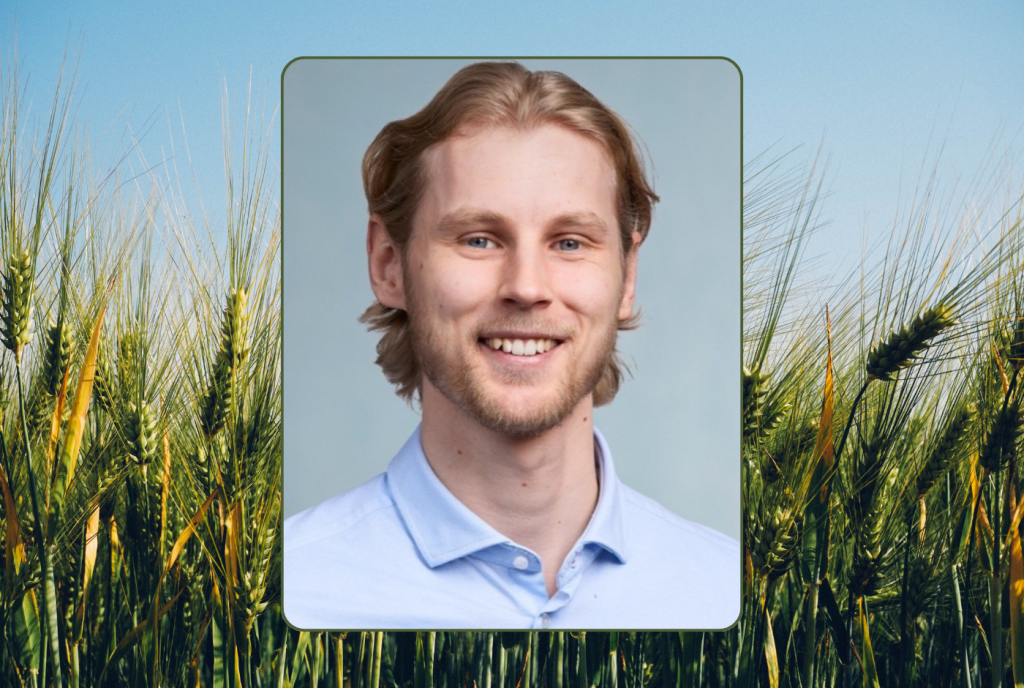
Hi Andreas! You have a background in biotechnology. What made you choose a degree in this field?
I’ve always been fascinated by how living things interact with each other, and the environment in general. Originally, I wanted to study pure biology, but I ended up choosing a biotech degree at university, which combined biology with applied engineering; this sparked my interest in using living systems for practical solutions, like environmental technologies for water or air treatment.
Where do you think your passion for the environment came from?
Even though I don’t have any close family connections to farming or agriculture, I would say my upbringing played a big role. From a very young age, I loved animals and learning about the environment, and growing up in the Danish countryside meant I got to spend a lot of time outdoors; also, my grandfather was a fisherman and hunter, and he taught me a lot about nature. That early exposure really shaped my interests, and I guess it somehow drove me towards the career path I’m in today.
Did you ever consider staying in academia after your degree? Or did you know you wanted to go straight into industry?
Yes, I actually thought about doing a PhD because I really enjoyed the research aspect of biotechnology. But I also knew I wanted to have a more hands-on approach and be able to tailor innovation efforts to fit specific target groups, which is why working at SEGES Innovation felt like a great match for me.
I started in my role as a consultant specialised in biogas and biorefining shortly after finishing my degree, and I’ve really enjoyed being in close contact with farmers in Denmark. I also get to focus on environmental and agricultural technologies, which is the area I’m most passionate about, and it’s great because I feel like I can make a big impact through what I do.
Can you tell us a bit more about SEGES Innovation and its mission?
SEGES Innovation is an independent research and innovation company based in Denmark, specialised in agricultural innovation. We work with national and EU funding to develop projects that help primary producers use more sustainable tools, technologies and approaches, like we’re doing in Rural BioReFarmeries.
Our goal is to help farmers adopt climate-friendly practices, often by providing practical solutions and knowledge that they can implement directly.
What is your role in the Rural BioReFarmeries project?
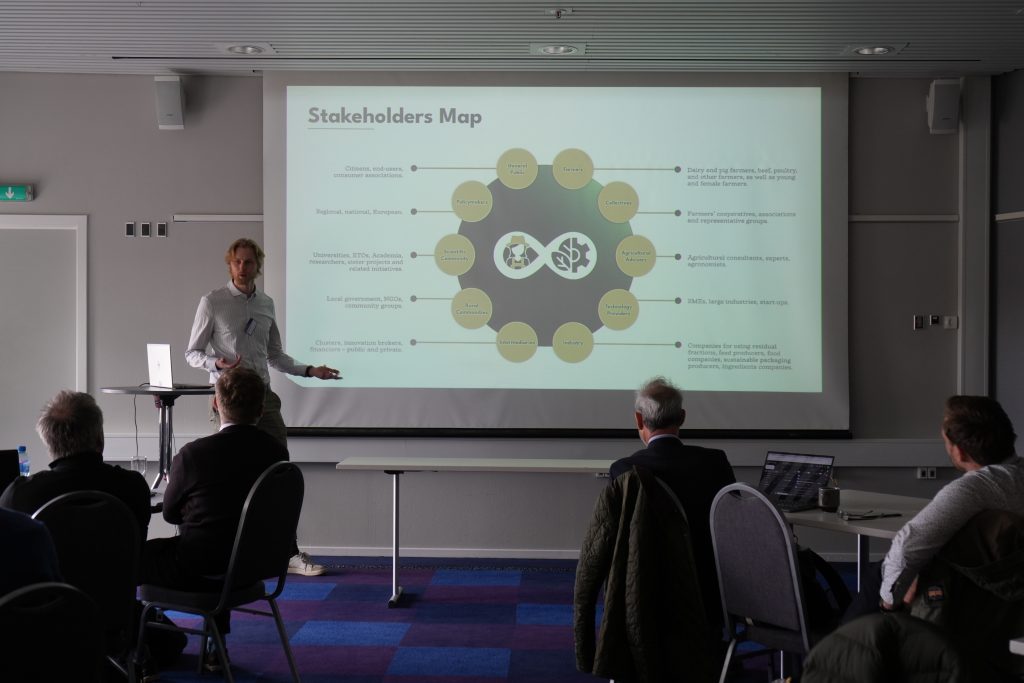
I’m the leader for Work Package 7, which focuses on developing inclusive business models for green biorefineries. One of the main objectives of the project is to place farmers at the core of biorefining operations, in a way that brings new income streams for farms and even job opportunities for the rural communities involved. To achieve this, we’re collaborating with other partners in the consortium to create a series of training materials and activities to help farmers understand and implement green biorefining technologies.
We also work closely with AUSTRALO, our communication and dissemination partner in the project, to spread awareness about the project and all the different activities we’ll be organising. We need to ensure that the biorefining sector can grow beyond Denmark and Ireland, so another big task for us is building the Rural BioReFarmeries Network to connect stakeholders across Europe — farmers, machinery suppliers, policy-makers and more.
By facilitating knowledge exchange, we aim to help stakeholders collaborate, share experiences and implement solutions in their local contexts. If our goal is to move from theory to practice, the Rural BioReFarmeries network will be crucial to bring green biorefining into real-life scenarios.
Replicability is a key concept in this project. What does it mean and why is it important?
Replicability means that a successful model in one country can be adapted and implemented elsewhere. For example, if a biorefinery model works in Denmark, farmers in other countries can follow the same blueprint. This is why, as part of our involvement in the project, SEGES Innovation will provide guidance and training to support this transfer, making it easier for green biorefining to spread across rural Europe.
Most farmers are curious and open to innovation, especially if it offers new income opportunities or environmental benefits. But some may hesitate initially, as they need to see clear financial and operational advantages. That’s why sustainable business models are so important to make these models highly replicable in the EU, and it’s how we can ensure the primary producers who take part in green biorefinery systems can keep their farms profitable in the long term.
You mentioned you’re working closely with many different partners in WP7. How do you feel about the interdisciplinary and international collaboration within the project?
I think it’s very exciting, and incredibly valuable. Working with partners from different countries and sectors provides new perspectives and helps us understand the full value chain. It’s a great way to learn from each other and explore opportunities and challenges in different European contexts.
From all the different goals you’ll be working towards, what’s the one outcome you’ll feel very proud to achieve by the end of the project?
It’s very difficult to choose! But, if I had to pick only one, I truly hope we can establish replicable business models that allow green biorefinery plants to operate across Europe.
Seeing more plants implemented beyond Denmark and Ireland, and potentially sparking a whole new sector in sustainable agriculture, would be a major achievement and something that I’d feel very proud of — especially knowing that it would be the fruit of a big team effort.
Stay up-to date with the Rural BioReFarmeries journey!
- Follow us on LinkedIn, X and BlueSky
- Watch our latest videos on YouTube
- Subscribe to the RBRF newsletter