
As spring brought new momentum for bioeconomy innovation throughout Europe, partners in the Rural BioReFarmeries (RBRF) consortium have continued to make strong progress across research, pilot activities and cross-work package collaboration – shaping the project’s journey towards demonstrating how small-scale green biorefineries can support a circular bioeconomy while strengthening rural regions.
Since the latest updates shared in January 2026, our partners have advanced field trial preparations, pilot-scale biorefinery optimisation, new biomass and fibre testing, as well as establishing stronger alignment between technical, environmental and business model activities. Read on to find out more!
Updates from our work packages 
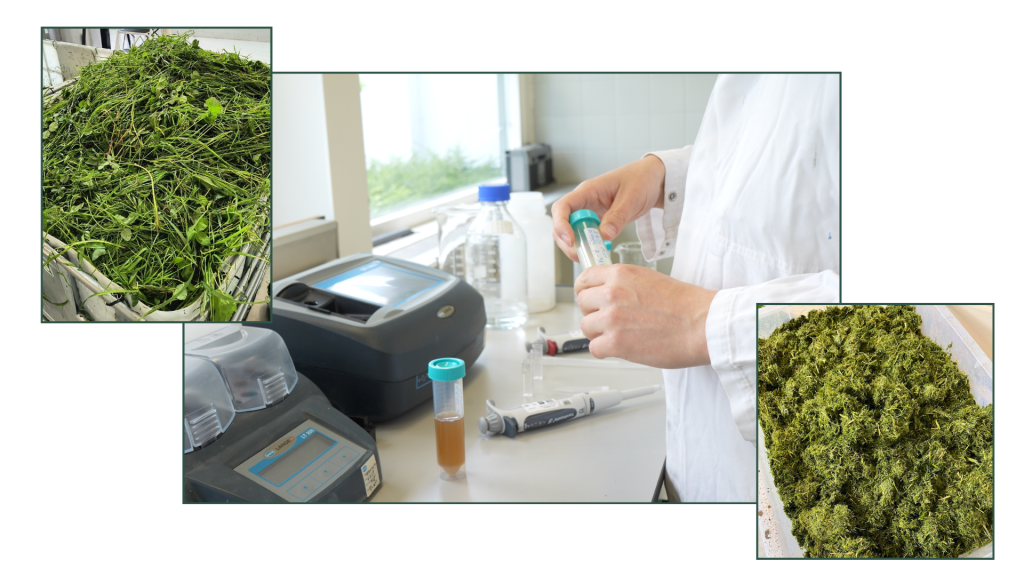
Across the technical work packages, partners are moving steadily from planning and testing toward larger-scale implementation and validation.
WP1 – Sustainable Local Supply Chain Optimisation
After deploying a user survey to assess the current understanding and uses of green biorefinery technologies amongst farmers in Denmark and Ireland, partners from Aarhus University are integrating the findings into a related deliverable, which will focus on mapping out local biomass value chains for various biorefinery configurations.
The supply chain logistics model is also progressing well and is now being programmed using preliminary datasets. An important next step will be integrating the standalone logistics model into the ICT infrastructure being developed by farmB, which will result in a unified tool that combines logistics planning with harvest prediction and decision support for farmers.
WP2 – Rural Green Biorefineries
Work continues to advance on pilot and demonstration-scale for green biorefinery activities, both in Ireland with Munster Technological University and in Denmark with Aarhus University. Cross-work package coordination remains strong, particularly around biomass requirements and sample sharing.
Additional work continues on white-protein production and silage processing, with new samples now available for testing in WP5. Cooling systems for demo-scale processing have also been upgraded, helping preserve protein quality and improve overall process efficiency.
WP3 – Bio-based Fibre and Packaging Development and Validation
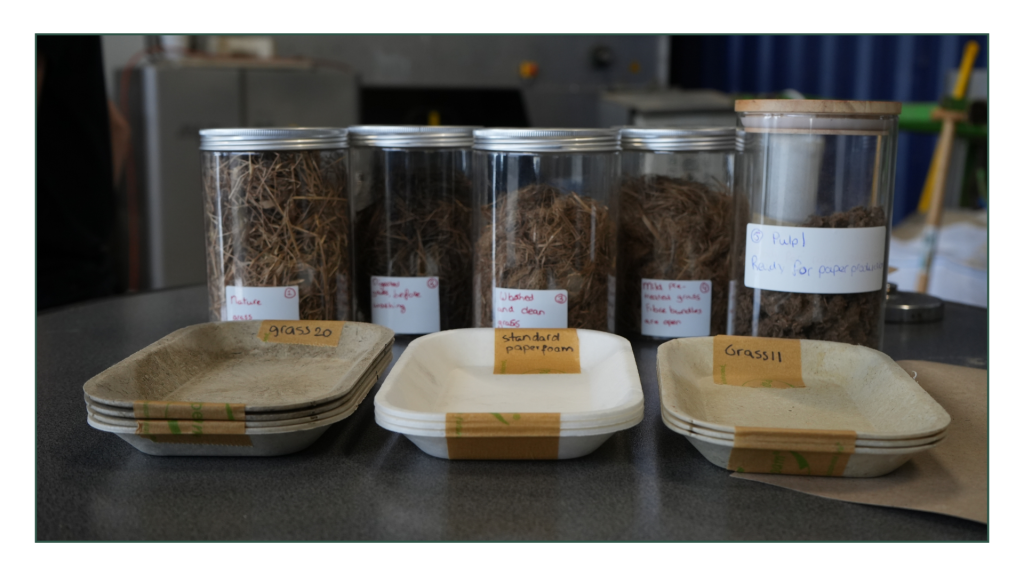
ACRRES at Wageningen University & Research, in collaboration with PaperFoam, keep advancing the development of bio-based packaging materials using grass fibers collected from the Irish and Danish demo sites. The coming months will be dedicated to improving the resistance and durability of the packaging samples, using improved fibers to deliver stronger packaging performance, in order to support the next stage of material validation for sustainable packaging applications.
The team from ACRRES are also working closely with AlgaNed at their demo site in Lelystad (Netherlands) to continue improving the systems for microalgae cultivation, using brown juices and digestate derived from green biorefinery activity.
WP4 – Production of Fatty Acids, Biogas and Nutrients from Brown Juice
Bench-scale bioreactor trials, sample logistics, concentration studies and characterisation work led by University of Galway remain on schedule, while Trinity College Dublin continues advancing concentration process testing.
Preparations are already underway for larger pilot and demonstration runs this summer, which will require significantly larger juice-volume samples provided by MTU and Aarhus.
WP5 – High Value Food, Flavours and Antimicrobials Development and Validation
The Carbery team started analysing the first Leaf Protein Concentrate (LPC) samples received from Aarhus University; the lab teams will now be looking at carbohydrate digestibility and potential processing improvements.
WP6 – Analysis of Environmental and Socio-Economic Performance
The Bioeconomy in Transition Research group from Unitelma Sapienza continues advancing the environmental and socio-economic assessment of the project, with a strong focus on Life Cycle Assessment (LCA) case studies.
The team have built specific LCA data collection templates to analyse the Irish and Danish case studies; this shared structure will help ensure comparability and consistency across environmental performance assessments throughout the project.
WP7 – Business Models, Ecosystem Building, Training and Outreach
This spring, WP7, led by SEGES Innovation, focused strongly on improving alignment between Techno-Economic Analysis (TEA), business model development and replication activities alongside researchers from Agricultural-University Plovdiv and Unitelma Sapienza.
SEGES have also been working closely with AUSTRALO, our partner in charge of Dissemination & Communication, on bringing the RBRF Network to life. This online space will connect key stakeholders from the entire green biorefinery value chain, including: research institutions, farmers’ cooperatives, industry representatives and EU-funded initiatives.
Those interested in joining can now sign up via this registration form.
Dissemination & Communication Activities 📣
Alongside the technical and scientific progress achieved this spring, Rural BioReFarmeries partners also continued to strengthen the project’s visibility across the European bioeconomy community through participation in major events, conferences and networking activities.
This spring, Rural BioReFarmeries partners continued to strengthen the project’s visibility through participation in several European bioeconomy events and networking activities.
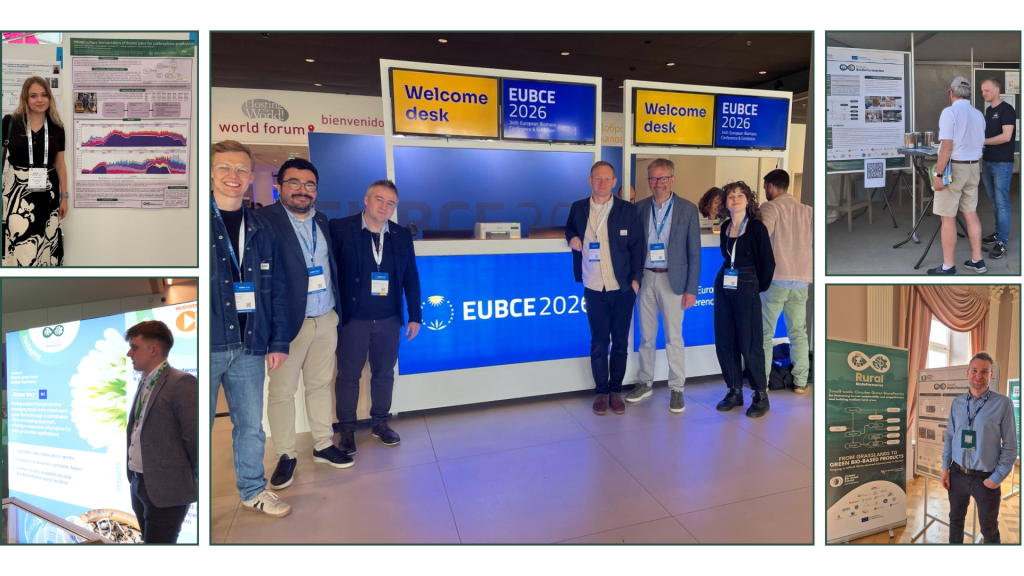
Our partners have been very active these last few months! Here are some of the highlights:
- James Gaffey introduced Rural BioReFarmeries as a case study at the CBE JU Info Day in Northern Ireland and also online during a meeting for the Protein Diversification Council Network hosted in Brussels.
- Packaging samples developed by ACRRES & PaperFoam were displayed as part of the bio-based materials exhibition organised within the CBE JU Stakeholder Forum in Brussels; Adam Mulcahy from MTU attended in representation of the project.
- James Gaffey presented ‘RuralBioReFarmeries: from grassland to alternative proteins’ during the Thursday Talks webinar organised by Biorefine Cluster Europe, which focused on alternative proteins developed from residual streams.
- Filip Brodowski from Poznan University of Technology attended the CBE JU Info Day in Poland and presented a poster about Rural BioReFarmeries as one of the projects transforming the bio-based sector in the region.
- Five partner representatives from MTU, Galway and Aarhus were selected to speak and present posters at the European Biomass Conference and Exhibition (EUBCE) 2026 in The Hague.
- Matthew Booth from ACRRES at Wageningen University & Research attended ‘Akkerbouwdag’ (Arable Farming Day) in Lelystad, The Netherlands, to spread the word about Rural BioReFarmeries.
- PhD researchers Luna Frank (Galway) and Amelia Zagórna (Poznan) travelled to Valencia, Spain, for the 19th IWA World Conference on Anaerobic Digestion, where they presented early results from their research on brown juice valorisation.
What’s next 
As the project moves into summer, the focus will shift increasingly toward large-scale validation and demonstration activities.
Field trials in Denmark will begin generating valuable real-world data for logistics and harvest scheduling models, while MTU prepares for the installation and operation of the demonstration plant. Larger pilot runs and continuous reactor trials will also intensify across multiple work packages, supporting scale-up activities across the consortium.
At the same time, partners will continue strengthening alignment between technical performance, environmental impact and business viability — ensuring that Rural BioReFarmeries delivers solutions that are not only scientifically robust, but also practical, scalable and beneficial for rural communities across Europe.